
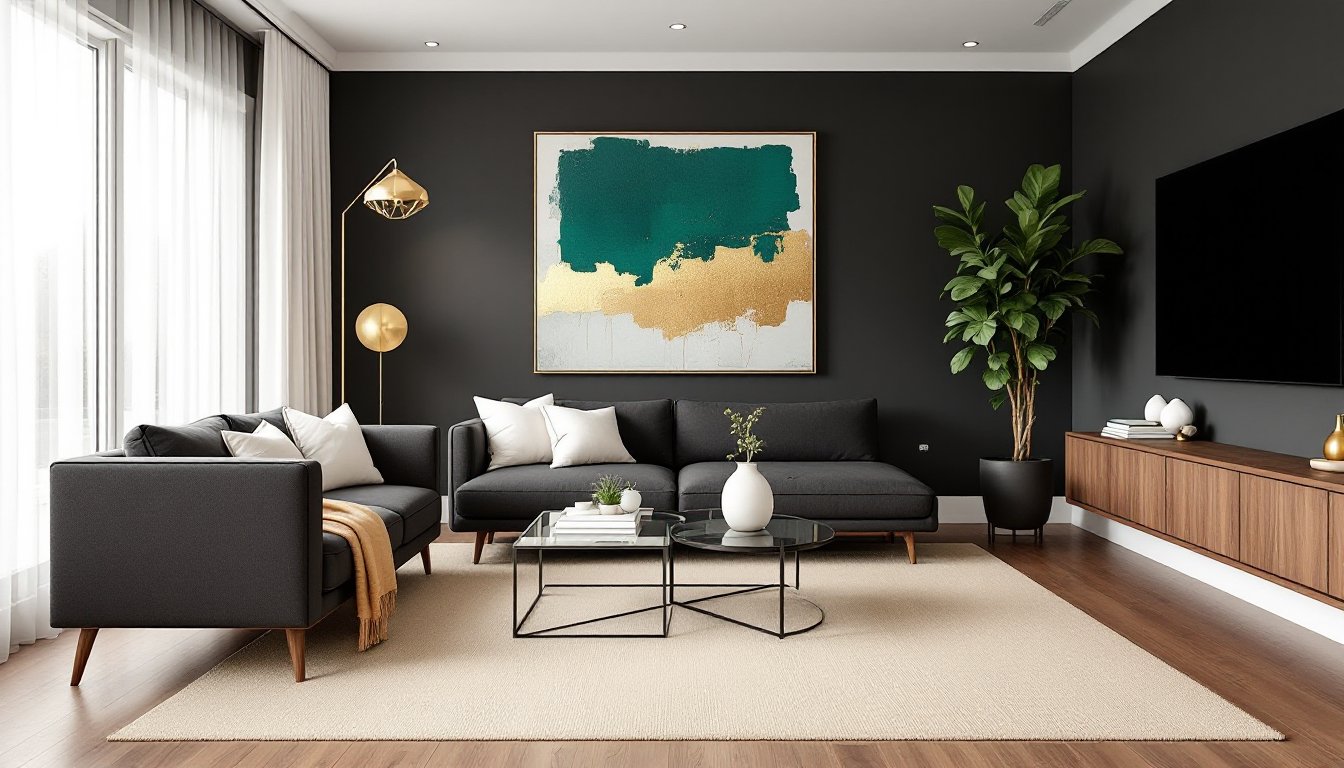
Black isn’t just a color, it’s a statement. A modern black living room creates depth, sophistication, and drama that lighter palettes can’t match. But here’s the catch: getting it right requires more than slapping black paint on the walls. Done poorly, a black room feels like a cave. Done well, it becomes the most striking space in the house. This guide walks through the essentials of designing a modern black living room that’s bold, balanced, and livable, covering everything from color selection and texture to lighting, furniture, and accents that make the design work.
Table of Contents
ToggleKey Takeaways
- A modern black living room creates timeless sophistication and depth, but success depends on balancing bold color choices with proper lighting, texture, and intentional design decisions.
- Choose the right black finish and undertones based on your room’s natural light exposure—warm blacks with charcoal undertones work best in north-facing spaces, while cooler blacks suit south-facing rooms.
- Layer multiple light sources including recessed ambient lighting, pendant fixtures, task lamps, and LED strips to prevent a black living room from feeling oppressive or cave-like.
- Incorporate diverse textures through natural wood, mixed fabrics (linen, velvet, wool), and varying metal finishes to add visual interest and warmth to black surfaces.
- Balance black walls with strategic accent colors like white, cream, jewel tones, or warm metallics, plus large-scale artwork and mirrors to reflect light and maintain visual breathing room.
- Select low-profile, scaled furniture with exposed legs and glass accents, then anchor the layout with a substantial area rug to keep the space feeling open and modern rather than heavy.
Why Black Is the Ultimate Choice for Modern Living Rooms
Black anchors a space visually in ways other colors simply can’t. It defines edges, absorbs light, and creates instant contrast, making architectural features, furniture silhouettes, and artwork pop. For modern design, which thrives on clean lines and intentional minimalism, black provides the visual weight that keeps a room from feeling sterile or underdone.
Unlike trendy neutrals that shift with the seasons, black is timeless. It doesn’t date. A well-executed black living room won’t look out of place in five years, even as design trends cycle through beige, sage, or terracotta.
Black also hides imperfections better than lighter shades. Scuffs on baseboards, minor wall dents, and uneven paint application are far less noticeable on dark surfaces. That’s a practical win for high-traffic living rooms.
One more advantage: black forces intentionality. Every piece of furniture, every light source, every accent color becomes a deliberate choice. There’s no hiding lazy design decisions under soft neutrals. The room either works or it doesn’t, and that clarity drives better results.
Essential Elements of a Modern Black Living Room
Choosing the Right Black Color Palette
Not all blacks are equal. Matte black absorbs light completely, creating a flat, dramatic surface that works well on accent walls or behind media centers. Satin or eggshell black offers a subtle sheen, reflecting just enough light to keep walls from feeling like voids. For trim and cabinetry, semi-gloss black provides durability and easy cleaning.
Test paint samples on multiple walls before committing. Natural light changes how black reads throughout the day. A north-facing room with limited sunlight may need a warmer black with brown or charcoal undertones (like Benjamin Moore Black Beauty or Sherwin-Williams Tricorn Black). South-facing rooms with abundant light can handle cooler, bluer blacks.
Don’t paint everything black. Even in a “black” living room, balance is key. Most successful designs use black on one or two feature walls, the ceiling, or built-ins, while leaving other surfaces in charcoal, deep gray, or white. Full black-box rooms work in loft spaces with 10-foot ceilings and industrial windows, less so in standard 8-foot suburban living rooms.
Balancing Black with Texture and Materials
Texture prevents a black room from reading as flat or one-dimensional. Layer materials with varying finishes: matte painted walls, polished black marble or granite, brushed black metal, velvet upholstery, and natural wood with dark stain.
Wood is critical. Even in a modern aesthetic, organic materials keep black from feeling cold. Walnut, oak with ebony stain, or charred cedar (shou sugi ban) introduce warmth without competing visually. Exposed wood ceiling beams or a live-edge coffee table provide textural contrast.
Incorporate fabrics with depth. A black linen sofa has a completely different presence than black leather. Linen softens: leather adds edge. Wool throws, jute rugs, and cotton canvas curtains break up reflective surfaces and absorb sound, which is important in rooms with hard flooring and minimal soft furnishings.
Metal finishes matter. Brushed brass, matte gold, or aged bronze hardware and light fixtures warm up black. Polished chrome or stainless steel keeps the palette cooler and more industrial. Avoid mixing too many metal finishes in one room, pick one or two and stick with them across lighting, furniture legs, and accessories.
Lighting Strategies to Brighten Your Black Living Room
Lighting makes or breaks a black living room. Inadequate lighting turns sophisticated into oppressive. The goal is layered illumination: ambient, task, and accent lighting working together.
Recessed lighting (6-inch cans with LED retrofits rated at 3000K–3500K) provides baseline ambient light. Space them 4–6 feet apart, keeping them 18–24 inches from walls to avoid harsh shadows. Dimmer switches are non-negotiable, control over light intensity is essential in a dark room.
Pendant lights and chandeliers add visual interest and direct downlight where needed. In modern black living rooms, fixtures with geometric shapes and brass accents work particularly well. Hang pendants 30–36 inches above coffee tables or side tables to create pools of light without glare.
Floor lamps and table lamps provide task lighting for reading and close work. Look for designs with adjustable arms or directional heads so light can be aimed where needed. Translucent shades diffuse light evenly: opaque shades create dramatic up-and-down lighting patterns on walls.
LED strip lighting hidden behind floating shelves, under cabinets, or along baseboards adds indirect ambient glow. Install strips rated at 2700K–3000K for warmth. They’re particularly effective behind a media console or bookshelf, creating a halo effect that lifts black surfaces visually.
Maximize natural light. Don’t block windows with heavy drapery. Use sheer linen or cotton panels that diffuse daylight without eliminating it. If privacy is a concern, install cellular shades or plantation shutters that can be adjusted for light control while maintaining airflow.
Furniture Selection and Layout Tips
Scale matters more in black rooms. Oversized furniture can overwhelm, while undersized pieces get swallowed. Measure twice. A standard 84-inch sofa works in most 12×16-foot living rooms. Smaller spaces (10×12 feet) need a 72-inch loveseat or sectional.
Low-profile furniture, pieces with exposed legs and open frames, keeps sightlines clear and prevents the room from feeling heavy. A sofa on tapered wood or metal legs creates visual breathing room underneath. Avoid skirted furniture or bulky bases that sit directly on the floor.
Mix materials. An all-black leather sectional on black walls is monotone. Instead, pair a charcoal linen sofa with a black leather accent chair and a walnut side table. The variation in texture and tone creates interest without abandoning the palette.
Floating furniture away from walls improves flow, especially in open-concept spaces. A sofa positioned 12–18 inches from the wall with a console table behind it defines the seating area without chopping up the room. Anchor the layout with a large area rug (at least 8×10 feet for most living rooms) that extends under the front legs of all seating.
Glass and acrylic furniture lighten the visual load. A glass coffee table or acrylic side table provides function without adding bulk. This is especially useful in smaller rooms where every piece competes for attention.
Avoid clutter. Modern design thrives on negative space. A black room amplifies visual clutter, so storage solutions are critical. Built-in shelving, cabinets with flush doors, and ottomans with hidden compartments keep surfaces clear.
Accent Colors and Decor That Complement Black
Accent colors inject personality without diluting the black foundation. White and cream create classic high-contrast modern looks, think white oak floors, ivory area rugs, and cream throw pillows. This pairing is clean, timeless, and flexible.
Warm metallics, brass, copper, gold, add luxury and warmth. A brass floor lamp, copper planters, or gold-framed mirrors catch light and create focal points. These work especially well in rooms with cooler black tones.
Deep jewel tones (emerald green, sapphire blue, burgundy) bring richness without lightening the palette. A velvet emerald accent chair or navy throw pillows layer color while maintaining the room’s moody sophistication. Designers on platforms like Decoist frequently showcase these combinations in contemporary interiors.
Natural greens from plants are essential. Living greenery, fiddle leaf figs, monstera, snake plants, softens hard lines and introduces organic shapes. Black pots or woven baskets keep the look cohesive.
Artwork and wall decor must be bold enough to hold their own. Large-scale pieces (36×48 inches minimum) with strong color or graphic composition work best. Small gallery walls get lost on black surfaces. Consider framed prints with white mats, abstract paintings with metallic accents, or sculptural wall art in brass or wood.
Mirrors are strategic tools. A large floor mirror or oversized wall mirror (48 inches or larger) reflects light and expands the perceived size of the room. Position mirrors opposite windows to bounce natural light deeper into the space.
Keep decor intentional. Every object should justify its presence. A few well-chosen pieces, ceramic vases, sculptural bowls, coffee table books, are more effective than crowded shelves. The goal is curation, not accumulation. For more modern decor inspiration, look to design-focused platforms that emphasize simplicity and function.
Textiles add warmth and comfort. Layer throw blankets in cream, camel, or charcoal over seating. Use pillows in varied textures, linen, velvet, faux fur, to create tactile interest. A wool or jute area rug grounds the space and softens acoustics.