
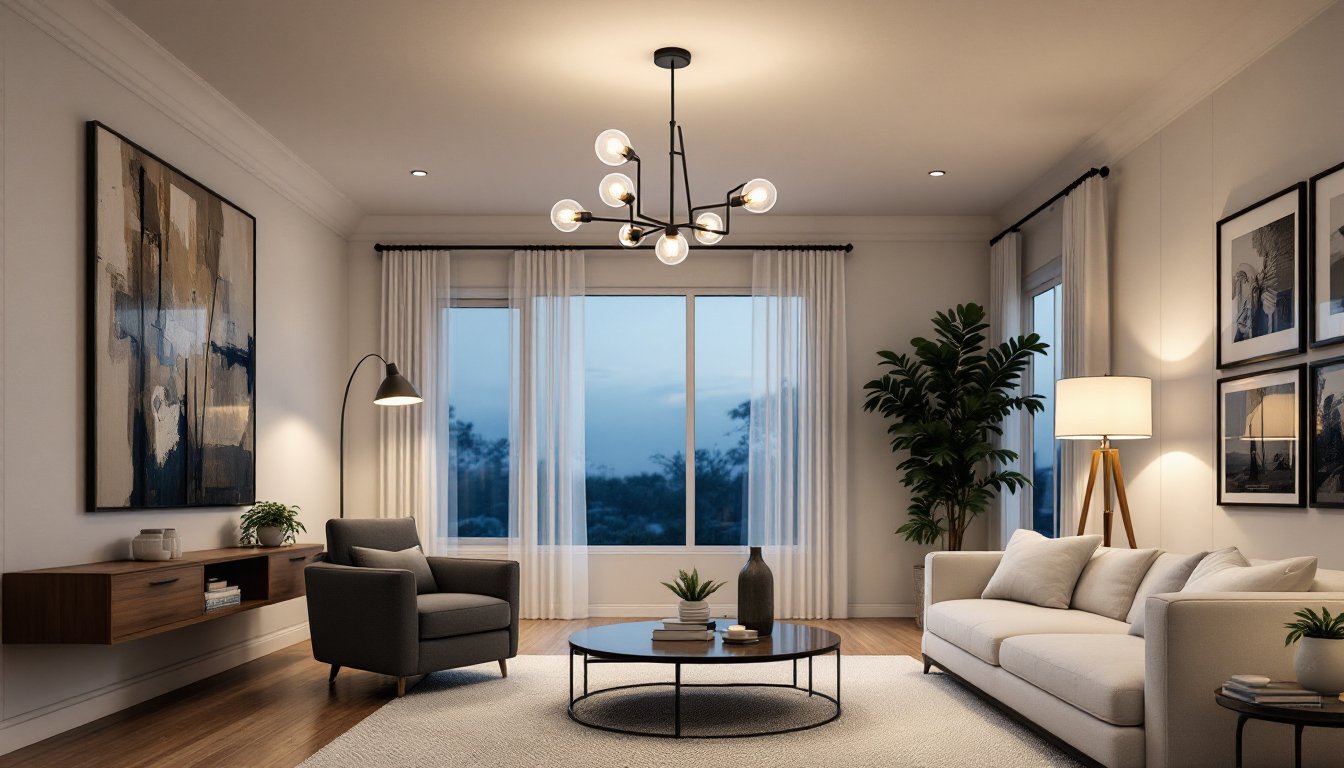
The right light fixture can transform a living room from flat and uninspiring to dynamic and inviting. Beyond just illuminating square footage, fixtures define zones, highlight architectural details, and set the mood for everything from movie nights to hosting dinner guests. Poor lighting, on the other hand, creates harsh shadows, makes spaces feel cramped, or turns a carefully chosen paint color into something unrecognizable. Whether working with a vaulted ceiling, a tight budget, or existing electrical boxes, homeowners have more options than ever in 2026, from DIY swaps that take thirty minutes to statement pieces that require a licensed electrician and a ceiling brace rated for 50+ pounds.
Table of Contents
ToggleKey Takeaways
- Light fixture ideas for living rooms require layered illumination combining ambient, task, and accent lighting to create flexibility for reading, entertaining, and relaxation.
- A statement chandelier should be sized using the formula of room length plus width converted to inches, hung 7–7.5 feet above the floor to avoid head hazards and visual imbalance.
- Modern pendant lights work best in clusters of three to five at staggered heights, with the lowest point at least 7 feet above the floor to maintain sightlines and prevent glare.
- Recessed and track lighting deliver minimalist appeal when properly spaced 4–6 feet apart and positioned 18–24 inches from walls, with dimming capabilities to avoid sterile over-lighting.
- DIY light fixture swaps take 30–60 minutes with basic tools and a voltage tester; upgrade to a fan-rated ceiling box rated for 50+ pounds before installing heavier fixtures.
- Warm white bulbs (2700K–3000K) create cozy ambiance in living rooms, while dimmable LED compatibility with TRIAC or ELV dimmers adds versatility without flickering.
Why Your Living Room Light Fixture Choice Matters
Living rooms demand layered illumination because they serve multiple functions: reading, conversation, TV watching, and entertaining. A single overhead fixture rarely delivers enough flexibility or visual interest.
From a technical standpoint, the fixture selection affects circuit load, mounting hardware requirements, and bulb replacement access. A chandelier weighing 40 pounds needs a ceiling fan-rated electrical box anchored to a joist or blocking, not just drywall screws. Ignoring this causes sagging, cracked plaster, or worse.
Aesthetically, the fixture acts as functional sculpture. It occupies vertical space at eye level when standing, so proportion matters. In a room with an 8-foot ceiling, anything hanging lower than 7 feet becomes a head hazard. For rooms with higher ceilings, fixtures should scale up in diameter and drop length to avoid looking lost.
Light color temperature also plays a role. Warm white (2700K–3000K) bulbs suit most living rooms, creating a cozy ambiance. Cooler temperatures (4000K+) feel clinical and work better in task-heavy spaces like kitchens or garages. Dimmer compatibility gives flexibility, but not all LED bulbs dim smoothly, check for dimmable labeling and pair with a compatible switch.
Statement Chandeliers That Command Attention
A chandelier serves as the living room’s visual anchor, especially in homes with 9-foot or taller ceilings. Modern designs have moved beyond crystal and brass, expect sculptural metalwork, oversized drum shades, and mixed materials like wood and Edison bulbs.
Sizing matters. A reliable formula: add the room’s length and width in feet, then convert that sum to inches for the fixture diameter. A 12×15-foot room works well with a chandelier around 27 inches wide. Hang the bottom of the fixture 7 to 7.5 feet above the floor in open rooms, or 30 to 36 inches above a coffee table if the seating area is directly beneath.
Installation notes: Most chandeliers require a ceiling box rated for at least 50 pounds. If the existing box is a standard plastic pancake box, it won’t cut it. Retrofit a fan-rated box by cutting drywall access, securing it to a joist or installing an adjustable ceiling brace between joists. This is straightforward with attic access: otherwise, expect some patching.
For renters or commitment-phobes, plug-in swag chandeliers bypass hardwiring. They hang from a ceiling hook and drape cord to an outlet. Not code-compliant for permanent installations, but a practical workaround.
Dimmer switches extend versatility. Install a TRIAC or ELV dimmer for LED compatibility, old incandescent dimmers cause flickering and buzzing with LEDs.
Modern Pendant Lights for Contemporary Living Rooms
Pendants work in living rooms when hung in multiples or used to define specific zones, over a reading nook, flanking a fireplace, or marking the transition between open-concept spaces. Single large pendants (18–24 inches in diameter) replace traditional chandeliers in modern or industrial interiors.
Cluster pendants, three to five fixtures at staggered heights, add visual interest without overwhelming the space. Use a multi-port canopy to run several pendants from one junction box, keeping wiring tidy. Balance is key: odd numbers look more dynamic, and varying drop lengths by 6 to 12 inches prevents a rigid, static appearance.
Many contemporary living room pendant designs feature exposed bulbs, so choose decorative filament LEDs or vintage-style globes. Standard A19 bulbs look utilitarian and cheap.
Mounting height: In open spaces, hang pendants so the lowest point sits at least 7 feet above the floor. Over furniture, drop them lower, 18 to 24 inches above a side table or console creates intimacy without obstructing sightlines.
Cord length adjustment is easier during installation than after. Most pendants ship with excess cord. Trim and re-strip the wire, or use cord grips to bundle and hide slack inside the canopy. For sloped or vaulted ceilings, look for pendants with adjustable canopies designed for angled mounting.
Pendants pair well with dimmer-controlled circuits. Since they often hang at eye level when seated, glare becomes an issue. Dimmable LEDs and shades or diffusers solve this.
Recessed and Track Lighting for Minimalist Appeal
Recessed lighting (can lights) delivers clean, unobtrusive illumination, ideal for modern or minimalist living rooms. Proper placement avoids the “airport runway” look: space fixtures 4 to 6 feet apart and position them 18 to 24 inches from walls to graze vertical surfaces and reduce shadows.
For new construction or remodels with ceiling access, use IC-rated housings if insulation contact is likely. Retrofit LED recessed kits work in existing ceilings without major demo, cut a hole with a hole saw (usually 4, 5, or 6 inches), pull Romex to the location, and clip the fixture into place. No separate housing needed.
Beam angle affects how light spreads. Narrow spots (15–25 degrees) highlight artwork or architectural features. Wider floods (40–60 degrees) provide ambient fill. Most living rooms benefit from floods, with a few spots for accent tasks.
Track lighting offers flexibility, fixtures slide and pivot along a powered rail, letting homeowners adjust aim as furniture and art change. Modern low-voltage LED track systems run cooler and more efficiently than older line-voltage halogen setups.
Installation requires mounting the track to ceiling joists or using toggle anchors in drywall (rated for at least 50 pounds for long runs). Hardwiring connects at one end via a standard junction box. Some kits include a plug-in adapter, though this looks amateurish unless the cord is hidden.
Recessed and track lights need dimming capability to avoid sterile, over-lit spaces. Pair with a 0–10V or phase-cut dimmer matched to LED specs.
Layered Lighting: Combining Fixtures for Maximum Impact
Relying on one overhead fixture leaves a living room flat and one-dimensional. Layered lighting combines three types: ambient (general overhead), task (reading lamps, under-cabinet strips), and accent (spotlights on art, uplights behind furniture).
Start with ambient fixtures, chandeliers, pendants, or recessed lights, that provide overall illumination. Aim for 20 to 30 lumens per square foot in living rooms. A 200-square-foot room needs roughly 4,000 to 6,000 lumens total. Divide that across all sources.
Add task lighting where activities demand it. Floor lamps with adjustable arms work beside reading chairs: table lamps on consoles or end tables fill dark corners and add warmth. Use three-way bulbs or dimmer-compatible LEDs for flexibility.
Accent lighting creates depth and drama. LED strip lights tucked behind crown molding or under floating shelves cast indirect glow that highlights architecture without glare. Picture lights or small recessed spots draw eyes to artwork or a feature wall.
Control each layer independently with separate switches or dimmers. Smart switches and bulbs enable scene programming, “movie mode” dims overheads and accents, “reading mode” brightens task lights. This requires planning circuits during rough-in, or retrofitting with smart plugs and battery-powered remotes.
For homeowners considering integrated modern lighting approaches, combining wired and plug-in fixtures offers the most versatility without requiring an electrician for every change.
Budget-Friendly DIY Light Fixture Upgrades
Swapping a light fixture ranks among the easiest electrical DIY projects. Most living room upgrades take 30 to 60 minutes and require only basic tools: a voltage tester, wire strippers, screwdriver, and a ladder.
Before starting: Turn off power at the breaker, not just the wall switch. Test wires with a non-contact voltage tester to confirm they’re dead. Touching a live wire isn’t a learning experience anyone wants.
- Remove the old fixture. Unscrew the canopy, disconnect wire nuts, and lower the fixture. Most mount to a crossbar attached to the ceiling box.
- Inspect the box. If it’s plastic and flimsy, consider upgrading to a metal fan-rated box, especially for heavier fixtures.
- Match wires: black (hot) to black, white (neutral) to white, bare copper (ground) to green or bare. Twist connections clockwise, then secure with wire nuts. Tug each wire, if it pulls free, redo the connection.
- Mount the new fixture’s crossbar to the box with provided screws. Tuck wires into the box, then attach the canopy.
- Install bulbs, restore power, and test.
Budget fixture sources: Discount home centers carry serviceable options under $100. Thrift stores and estate sales often have vintage or mid-century fixtures that just need rewiring and cleaning. Repainting or refinishing a dated brass chandelier with spray primer and matte black or brushed nickel paint transforms it for under $20.
Swap shades and bulbs on existing fixtures for a quick refresh. Drum shades, linen wraps, or Edison-style LED bulbs change character without touching wiring. Exploring room-by-room lighting techniques can inspire simple, low-cost updates.
When to call a pro: If the ceiling box is missing, wiring is aluminum (not copper), or the circuit breaker trips repeatedly, hire a licensed electrician. Aluminum wiring requires special connectors and techniques to prevent fire risk.
Conclusion
Living room lighting shapes how a space feels and functions every day. Statement chandeliers anchor the room, pendants define zones, recessed lights offer clean minimalism, and layered sources deliver flexibility. Budget-conscious DIYers can swap fixtures in under an hour, while more ambitious projects, like adding recessed cans or track systems, remain accessible with the right tools and planning. Focus on proportion, mounting safety, and layering light types, and the result will be a living room that works as hard as it looks good.