
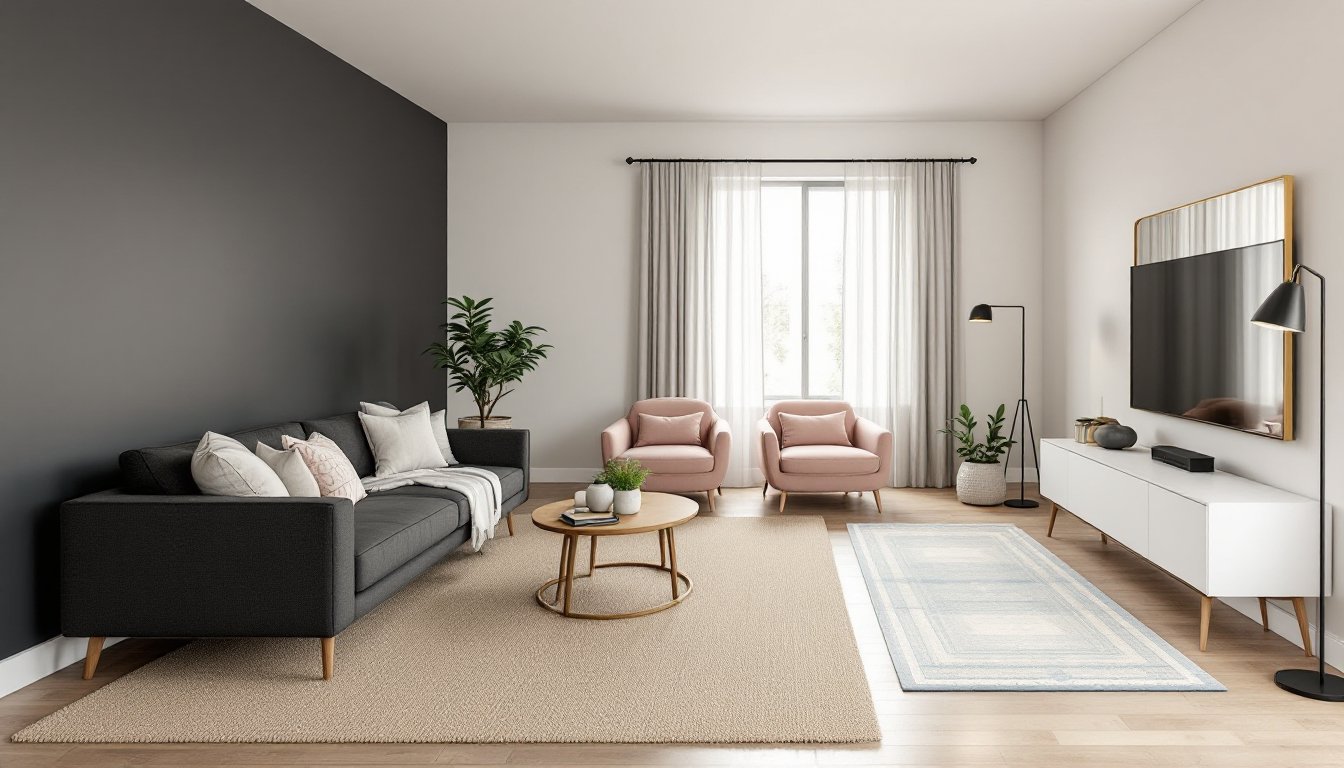
Long living rooms can feel like bowling alleys if you don’t plan the layout carefully. That stretched-out rectangle creates awkward dead zones, makes furniture placement a puzzle, and leaves homeowners unsure where to focus attention. But narrow doesn’t mean hopeless, with intentional zoning, smart furniture choices, and a few visual tricks, even the most tunnel-like space can feel balanced and inviting. This guide walks through practical layout strategies that address proportions, traffic flow, and function without requiring a contractor or major renovation.
Table of Contents
ToggleKey Takeaways
- Break your long living room into two or three distinct functional zones using floating furniture to eliminate the tunnel effect and create visual breaks.
- Use appropriately sized area rugs to anchor each zone—choose 8’x10′ or larger for main seating areas and 5’x7′ or 6’x9′ for secondary spaces, with at least 18-24 inches of clear gap between them.
- Layer artificial lighting with floor lamps, table lamps, and wall sconces rather than relying on a single overhead fixture to balance uneven natural light across the entire space.
- Select furniture with smaller footprints (32-36 inch sofa depth, exposed legs, armless chairs) and avoid pushing pieces against walls; instead, float them a few feet inward to create intentional, open arrangements.
- Paint short walls darker and long walls lighter to visually shorten the room’s length, and hang artwork and mirrors horizontally to emphasize width over height.
- Maintain a clear 30-36 inch pathway through the room for traffic flow, and test your layout with painter’s tape before finalizing furniture placement to ensure natural circulation.
Understanding the Challenges of Long Living Rooms
A long, narrow living room typically measures 10 to 14 feet wide and stretches 20 to 30 feet or more in length. That ratio creates a few specific problems.
First, it’s tough to establish a focal point. In a standard square room, the eye naturally lands on a fireplace, TV, or large window. In a long rectangle, sightlines scatter, and nothing feels anchored. Second, furniture tends to hug the walls, leaving a hollow runway down the center. Third, lighting becomes uneven, one end might flood with natural light while the other sits dim and forgotten.
Long rooms also complicate traffic flow. If there’s a doorway at each end, the space becomes a hallway, and furniture placement has to account for the path people take through it. Ignoring that flow creates bottlenecks and forces guests to sidestep ottomans or squeeze behind sofas.
The goal isn’t to fight the proportions, it’s to work with them by dividing the length into functional zones, balancing visual weight, and using furniture, lighting, and decor to interrupt the tunnel effect.
Create Defined Zones with Furniture Placement
The most effective way to tame a long living room is to break it into two or three distinct zones. Think of it as creating mini-rooms within the larger footprint. Each zone serves a different purpose: seating and conversation, media and entertainment, reading nook, workspace, or dining area.
Start by floating furniture away from the walls. Position a sofa perpendicular to the long axis, not parallel. This instantly shortens the visual length and creates a boundary. Pair it with two chairs facing the sofa to form a conversation square. Behind the sofa, add a console table or a narrow bookshelf to define the back edge of the zone.
For the second zone, consider a smaller loveseat or a pair of accent chairs oriented toward a media console or a window. If space allows, a small dining table or a desk against one wall can occupy a third zone near the far end. The key is to avoid lining everything up in a single row, stagger the furniture groups to create visual and functional breaks.
Use Area Rugs to Anchor Different Activity Areas
Area rugs are the unsung heroes of long room layouts. A well-placed rug defines each zone and signals to the eye (and the foot) that one area ends and another begins.
Choose rugs sized to fit the furniture footprint of each zone. For a seating area, the rug should be large enough that at least the front legs of the sofa and chairs rest on it, ideally an 8′ x 10′ or 9′ x 12′ rug for a full sectional or sofa-and-chairs grouping. In a secondary zone, a smaller 5′ x 7′ or 6′ x 9′ works for a pair of chairs or a compact desk setup.
Make sure there’s a clear gap, at least 18 to 24 inches, between rugs to emphasize separation. Using different rug styles or textures also helps: a plush shag or neutral jute in the main seating area, a flat-weave or patterned runner in the secondary zone. Avoid matching rugs that blur the zones together.
Maximize Natural Light and Balance Illumination
Long rooms often have windows at one or both short ends, leaving the middle section dim. Uneven lighting exaggerates the tunnel effect and makes furniture arrangements feel disconnected.
If windows exist at only one end, avoid blocking them with tall furniture. Position lower-profile pieces, under 36 inches high, near windows so light can spill into the room. Use sheer or light-filtering window treatments instead of heavy drapes to keep brightness consistent throughout the day.
For the darker zones, layer in artificial lighting. A single overhead fixture won’t cut it. Add floor lamps near seating areas, table lamps on consoles or side tables, and consider wall sconces to free up surface space. Aim for at least three separate light sources per zone to eliminate shadows and create a sense of depth.
Dimmer switches help, too, they let occupants adjust lighting based on time of day and activity. If the ceiling height allows, a statement pendant or a linear chandelier running parallel to the short axis can visually widen the space. Avoid long, narrow fixtures that mimic the room’s shape: they’ll reinforce the problem instead of solving it.
Strategic Furniture Selection for Narrow Spaces
Not all furniture fits well in a long, narrow room. Scale and proportion matter more here than in a standard layout. Oversized sectionals, deep sofas, or bulky entertainment centers can choke the width and make the space feel even tighter.
Look for pieces with a smaller footprint. A sofa with a depth of 32 to 36 inches works better than a deep lounger at 40-plus inches. Armless chairs or those with exposed legs create visual openness, solid, boxy frames make the room feel heavy. Modern furniture trends often emphasize clean lines and compact profiles that suit narrow layouts.
Consider dual-purpose furniture. A storage ottoman doubles as seating and hides clutter. A console table behind the sofa provides surface space without adding bulk. A narrow bookshelf (around 12 inches deep) can serve as a room divider without blocking sightlines.
Avoid pushing all furniture against the walls. That’s the instinct in tight spaces, but it amplifies the bowling-alley effect. Instead, pull pieces a few feet inward to create breathing room and a sense of intentional arrangement. If the room is under 12 feet wide, a single sofa floated in the center with a narrow console behind it often works better than cramming in a sectional.
Visual Tricks to Widen and Balance Proportions
Paint, decor, and strategic styling can alter how a long room feels without moving a single wall.
Paint the short walls a darker or bolder color than the long walls. This visually pulls the ends inward and shortens the perceived length. Conversely, keep the long walls light and neutral to push them outward. An accent wall at one end, painted, wallpapered, or clad in board-and-batten, draws the eye and creates a focal point that breaks up the stretch.
Hang artwork and mirrors horizontally, not vertically. A wide gallery wall or a large horizontal mirror emphasizes width and counters the narrow proportions. Avoid tall, narrow frames that echo the room’s shape. Mirrors placed opposite windows also bounce light into dim zones and create the illusion of depth.
Small space living tips often recommend using low-profile furniture and avoiding clutter on surfaces, both critical in narrow rooms where visual weight accumulates quickly. Keep decor minimal and intentional. A few large-scale pieces (a substantial coffee table, a bold floor lamp) read better than a crowd of small accessories.
Consider ceiling treatments, too. If the ceiling is at least 9 feet high, painting it a shade or two darker than the walls can make the space feel cozier and less tunnel-like. Crown molding or picture rail installed on the short walls adds architectural interest and frames the room.
Traffic Flow and Functional Layout Planning
A long living room often doubles as a pass-through, especially in open-floor-plan homes or apartments with doors at each end. Planning for foot traffic is as important as arranging furniture.
Leave a clear pathway at least 30 to 36 inches wide through the length of the room. This is wide enough for two people to pass comfortably without turning sideways. If the room serves as the main route between spaces, say, from the front door to the kitchen, keep that path unobstructed. Position furniture so it defines zones without blocking movement.
In narrow rooms (under 11 feet wide), place the sofa and chairs on one side and leave the opposite side open for circulation. In wider rooms (13 feet or more), a centered furniture grouping with pathways on both sides works well. Home layout design resources frequently highlight the importance of maintaining clear sightlines and accessible routes in multipurpose spaces.
Test the layout before committing. Use painter’s tape on the floor to mark furniture outlines and walk through the space. Does the flow feel natural? Can someone carry a tray of drinks without navigating an obstacle course? Adjust as needed.
If kids or pets share the space, account for their movement patterns, too. Avoid placing delicate decor or wobbly side tables in high-traffic zones. Anchor rugs with non-slip pads to prevent tripping hazards.
Finally, think about electrical outlets and media connections. Long rooms often have outlets concentrated on one or two walls, which limits where lamps, TVs, and chargers can go. If necessary, use low-profile extension cords or cord covers that run along baseboards, never across open floor space. For a more permanent solution, an electrician can add outlets mid-room, though that’s a bigger project and may require opening walls.