
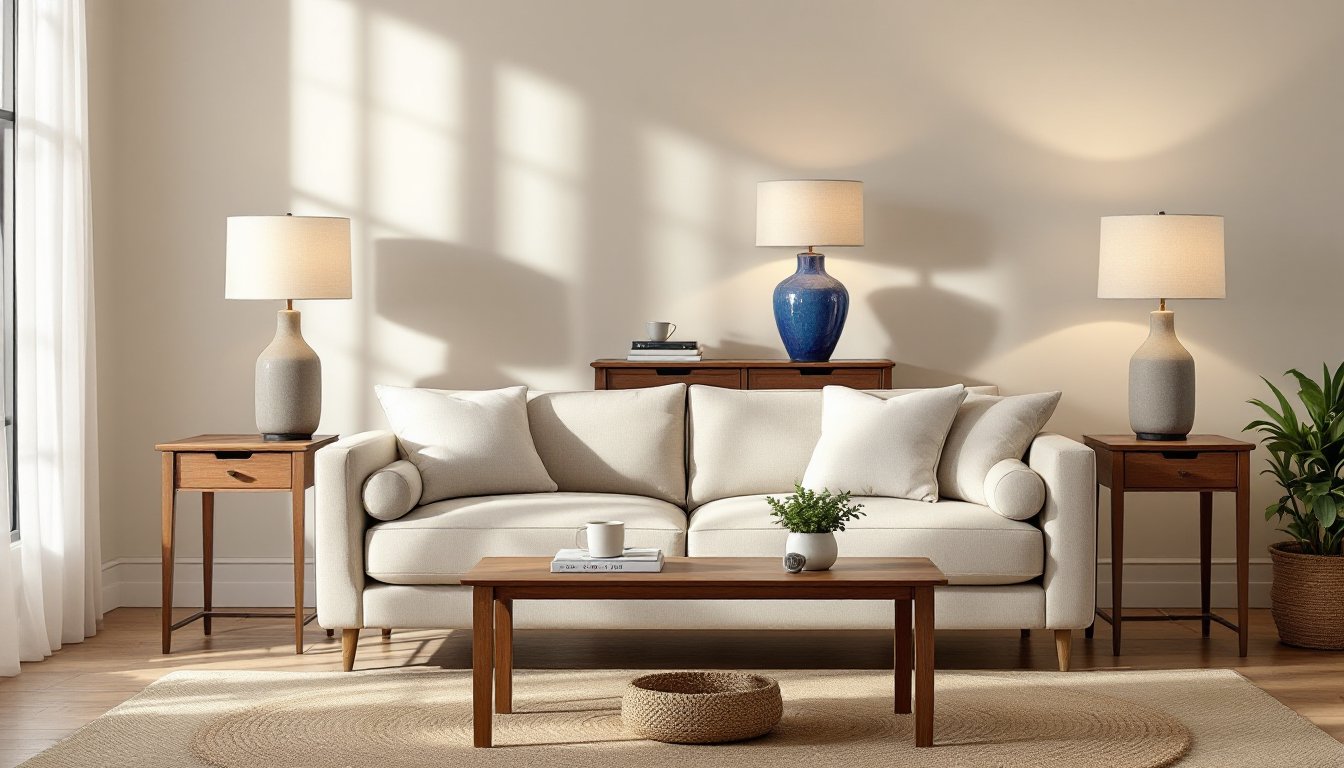
Table lamps do more than light up a corner, they set mood, anchor furniture groupings, and pull together color schemes. Whether someone’s working with a tight budget or ready to invest in a statement piece, the right lamp can transform a living room from flat to finished. This guide covers practical styles, DIY builds, and selection tips to help homeowners match lighting to their space, furniture scale, and daily needs. No fluff, just functional ideas that work.
Table of Contents
ToggleKey Takeaways
- Table lamps create essential layered lighting in living rooms by softening harsh shadows and reducing eye strain while serving as vertical design elements that balance furniture lines.
- Most living rooms benefit from two to four table lamps positioned strategically—such as flanking a sofa for symmetry or anchoring a console table as a focal point—with adjustable brightness for mood control.
- Modern and minimalist table lamp ideas feature clean geometric bases, industrial materials like concrete and metal, and compact proportions (under 6-inch footprints) to maintain streamlined aesthetics.
- Rustic and farmhouse-inspired lamps use natural materials like distressed wood, ceramic, and galvanized metal with larger proportions (28+ inches) to balance oversized furniture, while DIY farmhouse lamp kits cost $15–$25 from hardware stores.
- Statement lamps double as sculptural focal points with oversized, bold designs—such as urn-style bases (32–36 inches) or geometric brass frameworks—that anchor color palettes when other decor stays restrained.
- Proper lamp selection requires measuring height at 1.5 times the table’s height, choosing appropriate lumens for the task (400–800 for reading), and coordinating finishes with existing fixtures while managing cord placement strategically.
Why Table Lamps Are Essential for Living Room Design
Table lamps provide task lighting where overhead fixtures fall short, reading nooks, side tables flanking sofas, console tables behind seating. They create layered lighting, which is critical for functionality and ambiance. A single ceiling fixture casts harsh shadows: adding table lamps at mid-height softens the space and reduces eye strain.
From a design standpoint, lamps act as vertical elements that balance horizontal furniture lines. A 24–30-inch lamp on an end table draws the eye upward and fills dead space. They also offer flexibility: swap a lampshade or base to refresh a room’s look without repainting or reupholstering.
Most living rooms benefit from two to four table lamps depending on size and layout. Pair lamps on either side of a sofa for symmetry, or use a single statement lamp on a console table as a focal point. Adjustable brightness (via three-way bulbs or dimmer switches) adds control over mood and energy use.
Modern and Minimalist Table Lamp Styles
Minimalist lamps favor clean geometry: cylindrical bases, linear arms, or sculptural forms in matte black, brushed nickel, or raw concrete. Tripod lamps with slender legs and linen drum shades fit mid-century and Scandinavian interiors. Arc desk-style lamps scaled for side tables work in tight spaces where a traditional shade would overwhelm.
Material choices lean industrial: metal, glass, and untreated wood. A concrete base paired with a white fabric shade keeps things neutral but textured. Clear glass or acrylic bases feel lighter and suit small rooms, they don’t visually crowd a tabletop.
For tech-forward spaces, look for lamps with integrated USB ports or touch-sensitive dimming. These features add function without clutter. Bulb choice matters here: warm white LEDs (2700K) soften the stark lines common in modern design, while cooler temps (3000K) suit workspaces within the living room.
Keep proportions tight. A minimalist lamp on a narrow console should have a base footprint under 6 inches in diameter and a shade no wider than 12 inches to maintain the streamlined look.
Rustic and Farmhouse-Inspired Table Lamps
Farmhouse lamps lean into natural materials and vintage silhouettes. Turned wood bases with distressed finishes, mason jar conversions, and galvanized metal accents fit this style. Pair them with burlap or off-white linen shades for texture contrast.
Ceramic jug lamps mimic antique crocks and work on console tables or sideboards. Look for reactive glazes that add hand-thrown character. For a lighter farmhouse vibe, whitewashed wood bases with rope-wrapped necks offer coastal overlap.
Proportions trend larger in rustic design. A chunky 28-inch lamp balances oversized sectionals and reclaimed wood coffee tables. Avoid dainty shades, opt for tapered drums or empire shapes in 14–16-inch diameters.
DIYers can build farmhouse lamps using salvaged fence posts, vintage pulleys, or barn wood offcuts. Lamp kits from hardware stores include threaded rods, sockets, and cord sets for around $15–$25. Sand and seal wood bases with polyurethane to prevent drying and cracking indoors.
Many of today’s modern interior design trends incorporate rustic elements for warmth, making farmhouse lamps surprisingly versatile in blended styles.
Bold Statement Lamps for Contemporary Living Rooms
Statement lamps double as sculpture. Think oversized ceramic vessels in cobalt or terracotta, geometric brass frameworks, or asymmetrical mixed-material designs. These pieces command attention and anchor a room’s color palette.
Tall urn-style lamps (32–36 inches) suit large sectionals and open-concept layouts. Pair them with wide drum shades to balance the base’s mass. Colored glass bases, amber, smoke, or teal, add saturation without committing to painted walls.
For maximum impact, choose lamps with unique silhouettes: stacked spheres, abstract curves, or cantilevered arms. A single bold lamp on a side table can replace multiple smaller accessories, simplifying styling.
Scale is critical. Measure the table and nearby furniture before buying. The base should occupy no more than one-third of the tabletop, and the shade’s bottom edge should sit at or just below eye level when seated (typically 40–42 inches from the floor for standard side tables).
Mix finishes intentionally. A hammered copper lamp warms up cool gray upholstery: a glossy black ceramic base grounds a light, airy palette. Statement lamps work best when other decor stays restrained, let the lamp be the focal point.
DIY Table Lamp Projects to Personalize Your Space
Building a custom lamp is straightforward with the right kit and a stable base object. Lamp kits include all electrical components: threaded rod, socket, harp, finial, and cord with plug. They’re available at hardware stores for $12–$30 depending on quality.
Project 1: Stacked Wood Block Lamp
Cut 4×4 lumber into 3-inch blocks (actual size: 3.5 × 3.5 inches). Drill a centered 3/8-inch hole through each block using a spade bit and drill press for precision. Stack blocks to desired height (24–30 inches), threading the lamp rod through. Sand all surfaces to 220 grit, then finish with stain or matte paint. This design suits modern farmhouse or Scandinavian interiors.
Project 2: Concrete Base Lamp
Mix Quikrete countertop mix per instructions and pour into a silicone mold (cylindrical or geometric). Embed a 1/2-inch PVC pipe in the center as the rod channel. Cure for 72 hours, demold, and seal with concrete sealer. The industrial look pairs well with Edison bulbs and simple fabric shades.
Project 3: Vintage Bottle Conversion
Drill through glass bottles using a diamond-tipped hole saw and water lubrication. Work slowly to prevent cracking. Use a bottle lamp kit designed for narrow necks. Old wine bottles, apothecary jars, and ceramic vessels all work, just ensure the base is stable and heavy enough not to tip.
Safety note: Always use a polarized plug and ensure the socket is rated for the bulb wattage. If unfamiliar with electrical work, test the completed lamp before regular use. Wear safety glasses and a dust mask when cutting or drilling, and work in a ventilated area when applying finishes.
Browsing home design ideas can spark inspiration for unconventional base materials and finish combinations.
How to Choose the Right Table Lamp for Your Living Room
Start with measurements. The lamp (base plus shade) should be roughly 1.5 times the height of the table it sits on. For a 20-inch side table, target a 30-inch lamp. The shade’s diameter should be narrower than the table’s width, allow at least 2 inches of clearance on all sides.
Consider light output. A reading lamp needs 400–800 lumens (roughly 40–60-watt incandescent equivalent). Ambient lighting can sit lower. Use three-way bulbs (50/100/150W) or smart bulbs with dimming for flexibility.
Match the lamp’s style and finish to existing fixtures. If ceiling fixtures are brushed nickel, echo that in lamp bases. Mixed metals work, but limit it to two finishes per room to avoid visual clutter.
Shade material affects light quality. Fabric diffuses softly: white or cream liners maximize brightness. Opaque or dark shades direct light up and down, creating dramatic pools instead of general illumination.
For layered schemes, place lamps at varying heights. A 26-inch lamp on an end table, a 32-inch floor lamp in a corner, and 18-inch accent lamps on a console create depth. Avoid lining them up at the same height, it flattens the space.
Finally, think about cord management. Lamps far from outlets need extension cords: hide them with cable raceways or run them behind furniture. Some contemporary designs feature battery-powered LED lamps, which eliminate cords entirely but require recharging.
Professionals often reference modern living resources to stay current on proportion rules and emerging materials in lighting design.
Conclusion
Table lamps are low-commitment, high-impact tools for improving a living room’s function and feel. Whether someone’s drawn to sleek minimalism, cozy farmhouse warmth, or bold contemporary statements, the right lamp comes down to scale, material, and light quality. DIY builds open up endless customization, while thoughtful selection of ready-made lamps can anchor a room’s design. Measure twice, test bulb temps, and don’t skip the prep, those fundamentals make the difference between a lamp that fits and one that transforms the space.