A rug isn’t just floor decoration, it’s the foundation that anchors furniture, defines zones, and sets the visual tone for your entire living room. Modern rugs have evolved far beyond the traditional Persian or Oriental styles, embracing minimalist patterns, bold geometrics, organic textures, and unexpected color palettes. Whether someone’s updating a tired space or furnishing a new build, the right modern rug ties together seating arrangements, absorbs sound, and adds warmth underfoot. This guide walks through sizing, materials, placement strategies, and maintenance so homeowners can choose a rug that looks sharp and holds up to daily life.
Table of Contents
ToggleKey Takeaways
- Modern living room rugs prioritize clean lines, geometric patterns, and neutral color palettes over ornate traditional designs, creating intentional visual boundaries that anchor furniture and define zones.
- The most common sizing mistake is choosing an undersized rug; standard sizes like 8′ × 10′ work for most living rooms, with front furniture legs resting on the rug and 12–18″ of bare floor left between the rug edge and walls.
- Wool rugs offer the best durability and stain resistance for modern living rooms, while polypropylene provides a budget-friendly, high-performance alternative, and natural fibers like jute work best for layering or low-traffic areas.
- Proper maintenance—including weekly vacuuming, 180° rotation every 6–12 months, and immediate spill blotting—extends your rug’s lifespan and keeps it looking sharp for 15+ years.
- Always use a rug pad to prevent slipping, reduce wear, and protect both the rug backing and floor underneath, choosing natural rubber or felt options over plastic for hardwood surfaces.
What Defines a Modern Living Room Rug?
Modern rugs break from ornate, symmetrical traditions. They lean toward clean lines, abstract patterns, and a restrained color palette, think charcoal, ivory, rust, navy, or muted earth tones instead of jewel-bright medallions. Geometric shapes, asymmetrical designs, and negative space play starring roles.
Texture matters as much as pattern. Flat-weave constructions, low-pile synthetic blends, and natural fibers like jute or sisal deliver that pared-down aesthetic. High-pile shags can still fit a modern vibe if the color stays neutral and the silhouette is simple.
Modern doesn’t mean cold. Layering textures, a wool rug over hardwood, a hide accent on top of a larger flatweave, adds warmth without clutter. The key is intentionality: every element serves a visual or functional purpose, and nothing feels fussy or overdone.
Choosing the Right Size and Placement
Undersized rugs are the most common mistake. A rug should define the seating area, not float awkwardly in the middle of the floor. For most living rooms, the front legs of all major furniture pieces, sofa, chairs, coffee table, should rest on the rug. If budget or layout won’t allow that, at least the front legs of the sofa and chairs need to be on the rug, with the back legs on bare floor.
Standard modern living room rug sizes:
- 5′ × 8′: Works in compact apartments or under a coffee table in a small seating cluster. Usually too small for a full-size sofa.
- 8′ × 10′: The workhorse size. Fits most living rooms with a three-seat sofa, two chairs, and a coffee table. All furniture front legs sit on the rug.
- 9′ × 12′: Best for larger spaces or open-concept layouts where the rug needs to anchor a sectional and define the living zone from dining or kitchen areas.
- 10′ × 14′ or larger: Reserved for great rooms or loft spaces. Allows all four legs of every piece to rest on the rug.
Leave 12″–18″ of bare floor between the rug edge and the walls. This breathing room prevents the rug from looking wall-to-wall and maintains the clean, intentional look modern design demands. In open-concept homes, the rug edge becomes a soft boundary that separates living, dining, and kitchen zones without physical walls.
Top Modern Rug Materials and Textures
Material choice dictates durability, maintenance, and feel underfoot. Modern aesthetics favor performance and honesty, no pretending plastic is silk.
Wool: The gold standard. Naturally stain-resistant, flame-retardant, and resilient. A handwoven or hand-tufted wool rug in a low pile (under ½”) delivers texture without trapping dirt. Expect to pay $15–$40 per square foot for quality wool. It’s an investment that lasts 15+ years with proper care.
Jute and Sisal: Natural plant fibers bring organic texture and a casual, coastal vibe. They’re durable but coarse underfoot, better for low-traffic areas or layering under softer accent rugs. Jute is softer than sisal but less moisture-tolerant. Neither hides stains well, so avoid them in homes with kids or pets prone to accidents.
Polypropylene (Olefin): Synthetic, budget-friendly, and stain-resistant. Machine-made polypropylene rugs mimic wool textures at a fraction of the cost, often $3–$8 per square foot. They’re ideal for high-traffic living rooms or renters who plan to move. UV-resistant versions work well in sunrooms.
Viscose and Chenille: These add sheen and softness but crush easily under furniture and show every footprint. Reserve them for low-traffic accent areas, not the main living room rug.
Flatweave (Kilim, Dhurrie): Reversible, easy to vacuum, and thin enough to fit under doors. Flatweaves suit minimalist interiors and layer well. Cotton and wool flatweaves are machine-washable in smaller sizes (under 5′ × 7′).
Popular Modern Rug Patterns and Colors
Modern patterns favor geometry, abstraction, and intentional asymmetry over traditional motifs. According to contemporary design trends, the most requested styles in 2026 include:
Geometric and Linear: Bold stripes, chevrons, hexagons, or grid patterns in contrasting neutrals (black-and-ivory, charcoal-and-cream). These anchor minimalist spaces and pair well with mid-century or Scandinavian furniture.
Abstract and Painterly: Watercolor washes, organic splotches, or hand-drawn line work. These soften hard-edged modern interiors and introduce subtle color without pattern overload. Think muted rust, sage, or dusty blue on an ivory or taupe base.
Solid with Textural Interest: A plain charcoal wool rug in a chunky loop pile or a cream jute in a tight herringbone weave. Pattern comes from texture variation, not printed design. This approach lets bold furniture or artwork take center stage.
Colorblocking: Large, simple fields of two or three colors, navy and camel, blush and gray, olive and cream. The effect is graphic but calm, especially in open-plan layouts where the rug needs to ground multiple furniture groupings.
Neutral Palette Dominance: Grays, taupes, warm whites, and soft blacks remain the backbone of modern rug color. Accent colors, burnt orange, teal, mustard, appear sparingly and in muted tones. Avoid anything that reads “country” or “rustic” unless layering for intentional contrast.
For homeowners drawing inspiration from modern interior showcases, remember that bold patterns work best in rooms with minimal wall art and streamlined furniture silhouettes.
Styling Tips for Different Living Room Layouts
Sectional Sofas: Use a large rug, at least 9′ × 12′, so the entire sectional footprint sits on it. If the sectional is L-shaped, orient the rug to mirror that shape or use a square rug (8′ × 8′ or 10′ × 10′) to balance the angular furniture. A rug that’s too small makes the sectional look like it’s floating.
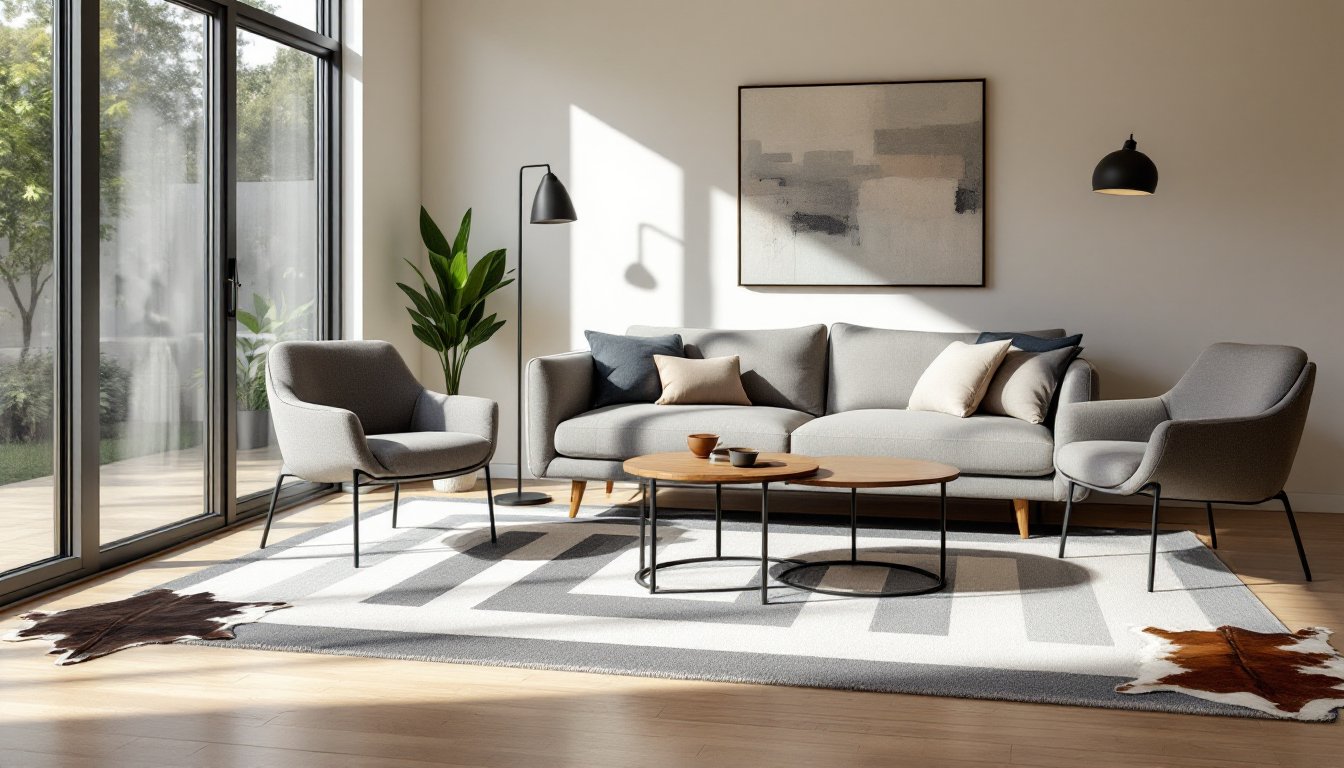
Sofa + Two Chairs (Conversational Layout): An 8′ × 10′ rug works well. Place the coffee table fully on the rug, with the sofa and chair front legs on the edge. This creates a cohesive seating cluster. If the chairs flank the sofa rather than facing it, ensure both chair front legs land on the rug.
Open-Concept Spaces: Use the rug to define the living zone. In a combined living-dining layout, the living room rug should stop short of the dining table by at least 12″. If zoning feels unclear, consider a second smaller rug (5′ × 7′) under a reading chair or console table to reinforce separate activity areas.
Small Spaces or Studio Apartments: A 5′ × 7′ or 6′ × 9′ rug can work if it’s centered under the coffee table with just the front sofa legs on it. Alternatively, go bigger than expected, an 8′ × 10′ rug in a small room can actually make the space feel larger by visually expanding the floor plane.
Layering Rugs: For added texture and a designer touch, layer a smaller hide, sheepskin, or patterned accent rug over a larger neutral flatweave. The base rug should be jute, sisal, or a low-pile solid: the top rug adds contrast. This technique is popular in modern home decor galleries and works especially well in eclectic or boho-modern hybrids.
Furniture Legs On or Off?: Front legs on, back legs off is the safest formula for most layouts. All legs on works in larger rooms and creates a more formal, unified look. Avoid placing only the coffee table on the rug with all furniture legs off, it disconnects the seating and makes the rug feel like an afterthought.
Maintenance and Care for Modern Rugs
Modern rugs often feature performance materials, but proper care extends lifespan and keeps them looking sharp.
Routine Maintenance:
- Vacuum weekly with a beater bar turned off for flatweaves and natural fibers. For wool or low-pile synthetics, a beater bar is fine.
- Rotate the rug 180° every 6–12 months to even out wear and sun fading, especially in rooms with large windows.
- Shake out or beat flatweave rugs outdoors monthly to dislodge embedded dirt.
Stain Treatment:
- Blot spills immediately with a clean, dry cloth, never rub, which spreads the stain and damages fibers.
- For wool rugs, use a pH-neutral cleaner or a 1:1 mix of white vinegar and water. Test in an inconspicuous corner first.
- Polypropylene handles most household cleaners, but avoid bleach, which can discolor even synthetic fibers.
- Jute and sisal are not water-friendly. For liquid spills, blot and air-dry completely to prevent mold. Use dry cleaning powder for solid stains.
Professional Cleaning:
- Wool and high-value handwoven rugs benefit from professional cleaning every 2–3 years. Look for a cleaner experienced with natural fibers, standard steam cleaning can over-wet and shrink wool.
- Synthetic rugs can often be deep-cleaned with a rented carpet cleaner and appropriate detergent. Follow the machine’s instructions and ensure full drying to prevent mildew.
Rug Pads:
Always use a rug pad. It prevents slipping (a safety issue on hardwood or tile), adds cushioning, and protects both the rug backing and the floor underneath. For hardwood, choose a non-slip pad with a natural rubber or felt backing, avoid PVC or plastic pads, which can trap moisture and discolor the floor. Rug pads should be 1″–2″ smaller than the rug on all sides so they’re invisible.
Sun Protection:
Direct sunlight fades natural and synthetic fibers alike. Use UV-filtering window treatments or rotate high-sun exposure rugs more frequently. Dark colors fade faster than light neutrals, even though appearing more forgiving of dirt.
Conclusion
Choosing a modern living room rug means balancing aesthetics, function, and budget. Measure twice, buy once, undersized rugs and mismatched materials cause more headaches than they’re worth. Prioritize quality in high-traffic areas, use performance fabrics where life gets messy, and don’t skip the rug pad. A well-chosen rug pulls a room together and holds up for years, making it one of the most impactful and practical design investments in any home.