
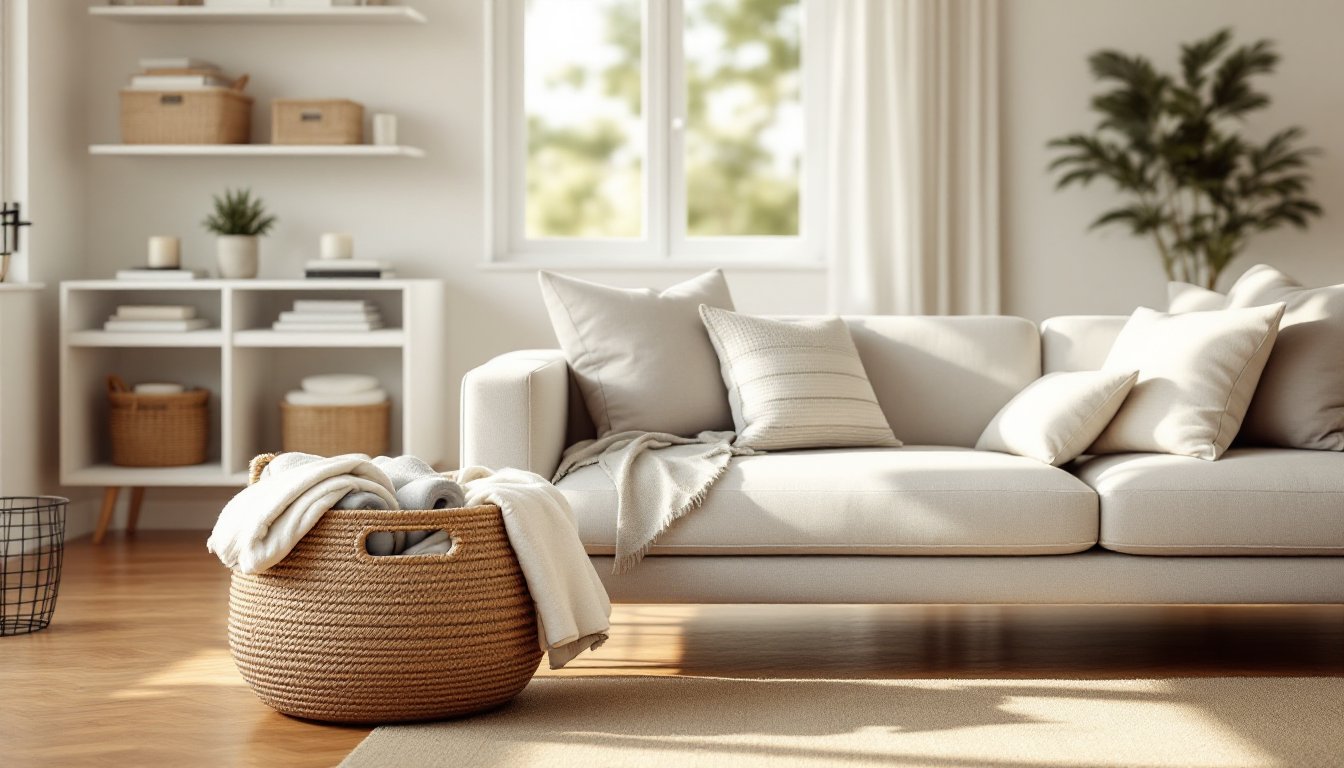
Baskets bring instant warmth and function to a living room, but they’re easy to get wrong. Too many, and the space looks cluttered. Too few, and storage suffers. The right basket decor balances visual appeal with practical organization, corralling throw blankets, remotes, magazines, and toys without sacrificing style. Unlike built-in cabinetry or custom shelving, baskets are flexible, affordable, and renter-friendly. They work in farmhouse interiors, modern minimalist spaces, and everything in between. This guide covers how to choose, place, and style baskets so they elevate a living room instead of just filling it.
Table of Contents
ToggleKey Takeaways
- Living room basket decor balances clutter control and visual appeal, offering flexible, affordable storage that works in any design style from farmhouse to modern minimalist.
- Choose baskets based on scale, shape, and material—wicker for durability, seagrass for soft appeal, wire for industrial spaces, and jute for textural impact.
- Strategic basket placement in corners, under console tables, beside sofas, or on shelves maximizes both storage and design impact without requiring permanent alterations.
- Keep basket contents organized by labeling, lining delicate items, and folding instead of stuffing to maintain an intentional look that prevents clutter.
- DIY basket projects like painting, dip-dyeing, or adding leather handles let you customize basket decor to match your living room’s color palette and aesthetic.
- Rotate seasonal contents and layer textures—pairing rough jute with smooth ceramics or mixing natural materials—to keep living room baskets feeling fresh and designed.
Why Baskets Are the Perfect Living Room Decor Solution
Baskets solve two problems at once: clutter control and empty corners. They’re modular, add or remove them as needs change, and they don’t require wall anchors, studs, or permanent alterations. This makes them ideal for renters or homeowners testing layouts before committing to built-ins.
Unlike plastic bins, baskets add texture. Woven natural fibers soften hard surfaces like wood floors, tile, or metal furniture legs. They reflect light differently than smooth materials, creating visual interest without pattern overload.
Baskets also hide mess instantly. Toss in charging cables, remote controls, or kids’ toys, and the living room looks intentional instead of chaotic. They’re easier to access than drawers or lidded storage, so family members actually use them.
From a design standpoint, baskets bridge styles. A wire basket fits industrial lofts. Seagrass suits coastal or bohemian spaces. Wicker works in traditional or farmhouse rooms. Swap them seasonally without repainting or reupholstering.
Choosing the Right Baskets for Your Living Room Style
Scale comes first. Measure the space where the basket will sit, under a console table, beside a sofa, or on a shelf. Leave 2–3 inches of clearance on all sides so the basket doesn’t look crammed in. For floor placement, baskets between 12–18 inches tall work for most living rooms without blocking sightlines.
Shape matters for function. Round baskets soften angular furniture but waste corner space. Rectangular or square baskets maximize storage in tight spots. Tall, narrow baskets hold umbrellas or rolled blueprints: wide, shallow ones corral magazines or remotes.
Handle style affects portability. Cutout handles lie flat and stack easily. Rope or leather handles make baskets easier to carry but add height. If the basket sits on a high shelf, skip handles, they’re not necessary and can snag on shelf brackets.
Material Matters: Wicker, Seagrass, Wire, and Beyond
Wicker (woven rattan or willow) is durable and lightweight. It holds shape well but can snag fabrics. Best for storing blankets, pillows, or non-delicate items. Expect to pay $20–$60 depending on size and finish.
Seagrass is softer and more pliable than wicker. It has a subtle sheen and works in coastal or organic-modern spaces. Seagrass sheds slightly when new, vacuum around it for the first few weeks. It’s less structured, so it’s better for lightweight items like throws or paper goods.
Wire baskets suit industrial or minimalist interiors. They don’t hide contents, so they work best for attractive items, folded linen napkins, firewood, or potted plants. Wire basket designs can double as room dividers when placed behind furniture. Powder-coated wire resists rust better than raw metal.
Jute and rope baskets add chunky texture. They’re stiffer than seagrass and hold shape under weight. Jute frays over time, especially with heavy use, but it’s budget-friendly at $15–$40 per basket.
Fabric-lined baskets combine structure with softness. Look for removable liners, they’re machine washable and extend the basket’s life. These work well in homes with kids or pets where spills happen.
Creative Basket Placement Ideas for Maximum Impact
Under console tables: Use two or three baskets in graduated sizes to fill dead space. Store shoes, pet supplies, or craft materials. Leave the center basket slightly pulled forward to create visual rhythm instead of a rigid line.
Beside the sofa: A tall basket (16–20 inches) holds throw blankets within arm’s reach. Position it on the side without a side table to balance the furniture layout. If the sofa has exposed legs, choose a basket that sits flat on the floor, footed baskets tip easily.
On open shelving: Mix baskets with books and decorative objects. Place heavier baskets on lower shelves to prevent toppling. Use baskets to hide less attractive necessities like extension cords or board game boxes.
Corner clusters: Group three baskets of varying heights in an empty corner. Stack two small ones beside a larger floor basket, or use a plant stand to elevate one. This draws the eye upward and fills vertical space without adding furniture.
Underneath a coffee table with a lower shelf: Slide two shallow rectangular baskets onto the shelf. They corral remotes, coasters, and magazines while keeping the tabletop clear. Measure the shelf depth first, most are 10–14 inches deep.
Floating wall shelves: Smaller baskets (6–10 inches) organize mail, keys, or charging cables near the entryway. Use L-brackets rated for at least 20 pounds if the basket will hold anything heavy. Always anchor into studs or use appropriate drywall anchors.
Styling Baskets as Functional Storage Solutions
Label baskets if multiple people use the space. Use chalkboard tags, leather tags, or clip-on labels. This prevents the “where does this go?” problem and keeps systems running after the initial setup.
Line baskets holding items that might snag or stain. Drop a piece of muslin, an old pillowcase, or a canvas liner inside. This protects delicate throws and keeps wicker from catching on fabric loops.
For media storage, use a basket with a 10–12 inch opening to hold remotes, game controllers, and streaming device remotes upright. Drop in a small dish or tray at the bottom to separate tiny items like batteries or earbuds.
Kid-friendly baskets need durability. Soft-sided fabric bins or thick jute baskets withstand repeated tossing. Place them low enough for children to reach, no higher than 24 inches off the floor for toddlers.
Magazine and book storage works best in wide, shallow baskets. Stand magazines upright instead of stacking flat so titles stay visible. A basket roughly 14 inches wide and 6 inches deep holds 10–15 magazines without bending covers.
For throw blanket storage, fold blankets in thirds lengthwise, then roll them. This keeps them accessible and prevents the bottom blanket from getting crushed. A basket 16 inches in diameter holds three to four rolled throws.
If baskets are visible, keep contents neat. Fold or roll items instead of stuffing. A half-empty basket looks intentional: an overflowing one looks like a laundry hamper.
Seasonal and Textural Styling Tips for Basket Decor
Rotate basket contents seasonally to keep the living room feeling current. In fall and winter, fill baskets with chunky knit throws, flannel blankets, or faux fur. Swap to lightweight linen or cotton throws in spring and summer.
Add seasonal filler for decorative baskets. In autumn, toss in small pumpkins, pinecones, or dried wheat stems. For winter, use evergreen clippings, birch logs, or battery-operated string lights. Spring calls for faux florals or potted bulbs: summer works with seashells or driftwood.
Texture layering prevents baskets from blending into the background. Pair smooth leather or metal furniture with rough-woven jute. Combine matte seagrass baskets with glossy ceramic vases or glass lamps.
Color blocking creates impact. Use all-natural baskets for a cohesive, neutral look, or choose one accent color, charcoal, navy, or terracotta, and repeat it across three baskets in different sizes. Many designers favor home decor approaches that balance restraint with intentional pops of color.
For a collected-over-time look, mix basket styles slightly. Combine a seagrass basket with a wicker one, or pair a rope basket with a wire one. Keep the color palette tight, all naturals, all black, or all white, so the variety feels intentional.
Drape a throw or small blanket over the basket edge for a casual, lived-in look. This works best with sturdy baskets that won’t tip under the weight. Use a throw in a contrasting texture, linen over wicker, or cable knit over smooth seagrass.
DIY Basket Makeover Projects to Personalize Your Space
Paint baskets for a custom look. Use chalk paint or acrylic paint mixed with fabric medium (1:1 ratio) so it flexes with the weave. Apply two thin coats with a foam brush, letting each coat dry for at least two hours. Seal with matte polyurethane if the basket will hold damp items.
Dip-dyed baskets add a modern touch. Mix fabric dye according to package directions in a container deep enough to submerge half the basket. Dip for 10–15 minutes, then rinse until water runs clear. Hang to dry for 24 hours before use.
Stenciling works on flat-weave baskets. Secure a stencil with painter’s tape, then dab acrylic paint with a stencil brush. Pounce the brush straight down instead of sweeping to prevent bleeding under the stencil. Many crafters share DIY basket techniques that expand on basic painting methods.
Add leather handles to wire or wicker baskets. Cut two strips of 1-inch-wide leather to the desired length (usually 8–12 inches). Drill small pilot holes through the basket rim with a 1/16-inch bit, then attach handles with Chicago screws or rivets. This requires a rivet setter or a small hammer and anvil.
Basket liners are straightforward to sew. Measure the basket interior’s width, length, and height. Cut fabric 2 inches larger on all sides. Fold and press a 1-inch hem around the top edge. Sew the side seams, leaving the top open. Drop the liner in and fold the top edge over the basket rim. Use canvas, duck cloth, or heavy linen for structure.
For a boho look, wrap the basket rim with macramé cord or thick cotton rope. Secure the starting end with hot glue, then wrap tightly, adding a dab of glue every few inches. Finish by tucking the end under the last wrap and gluing in place.
Wear proper PPE: Use a dust mask when sanding baskets, gloves when handling dye or paint, and safety glasses if drilling. Work in a well-ventilated area, paint fumes and dye vapors build up quickly indoors.