Most living rooms have at least two corners that sit empty or collect clutter, awkward gaps that don’t quite fit furniture but feel too visible to ignore. Those overlooked angles represent some of the most underutilized real estate in the home, especially in smaller spaces where every square foot counts. Whether dealing with a narrow nook beside a window or a 90-degree pocket behind the sofa, treating corners as intentional design opportunities changes how a room functions and flows. The right approach turns dead zones into focal points, storage hubs, or cozy retreats without requiring major renovation work or custom millwork.
Table of Contents
ToggleKey Takeaways
- Living room corner decor ideas transform empty angles into functional focal points that improve room balance, flow, and the perception of space.
- A compact reading nook requires only 30 to 36 inches of corner depth with properly scaled seating like slipper chairs and wall-mounted task lighting.
- Vertical corner storage solutions such as ladder-style shelves, wall-mounted cabinets, and wraparound floating shelves maximize space without consuming floor area.
- Statement plants and groupings of varying heights take advantage of corners to introduce biophilic design while occupying minimal space.
- Corner desks measuring 48 to 60 inches along each wall leg provide ample workspace for productivity without requiring a full wall, supported by floating brackets for compact layouts.
- Strategic lighting and accent pieces prevent corners from falling into shadow and serve as visual anchors that make rooms feel intentional and complete rather than cluttered.
Why Living Room Corners Deserve Your Attention
Corners create visual weight in a room, leave them bare, and the eye registers an incomplete layout. Fill them thoughtfully, and the entire space feels more balanced and deliberate.
From a practical standpoint, corners offer vertical real estate that doesn’t eat into traffic paths or interfere with existing furniture arrangements. A five-foot corner might not accommodate a full bookcase along a flat wall, but it can handle a corner shelf unit, a tall plant, or a compact seating solution without crowding walkways.
In open-concept layouts, corners also serve as natural room dividers or transition zones. A well-placed floor lamp and chair in a living room corner can subtly separate the seating area from a dining zone without adding walls or bulky screens.
Ignoring corners forces the rest of the room to work harder. When perimeter space sits empty, furniture tends to float awkwardly or cluster in the center, disrupting flow and making rooms feel smaller than they are.
Cozy Reading Nooks and Seating Solutions
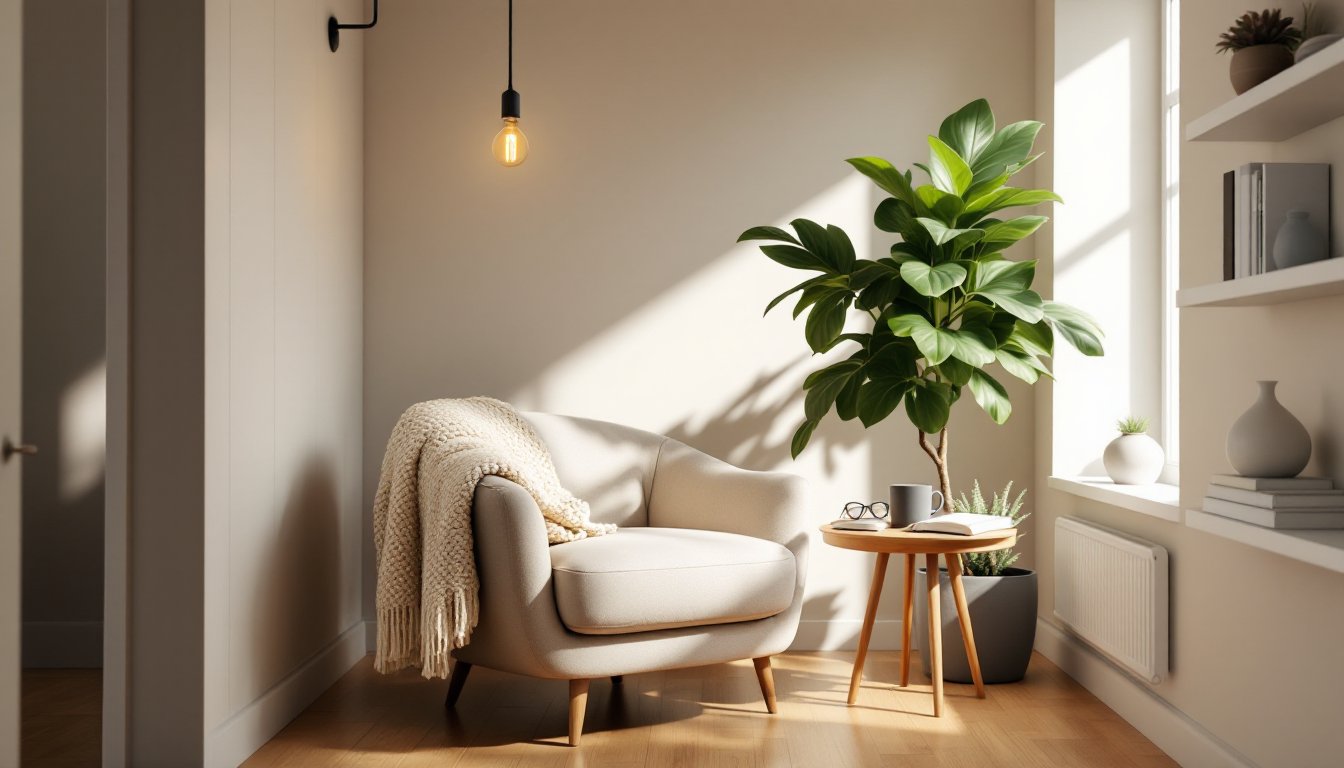
A reading nook requires surprisingly little space, about 30 to 36 inches of corner depth is enough for a small armchair or a built-in bench with cushions. The key is choosing seating scaled to the corner, not downsized versions of full-size furniture that look squeezed in.
Accent chairs work well if they have a compact footprint. Look for models with a seat depth around 20 to 22 inches and overall width under 30 inches. Armless slipper chairs or barrel chairs with curved backs naturally hug corner angles better than square club chairs.
For built-in seating, construct a simple corner bench using 2×4 framing secured to wall studs, topped with ¾-inch plywood and upholstered cushions. This approach makes use of odd corner dimensions and provides hidden storage underneath if designed with a hinged lid. Ensure the bench height sits around 18 inches for comfortable seating.
Lighting makes or breaks a reading nook. A swing-arm wall sconce mounted 40 to 42 inches above the seat provides adjustable task lighting without requiring floor space for a lamp. Alternatively, an arc floor lamp positioned behind the chair can curve overhead to deliver focused light.
Add a small side table, 16 to 20 inches in diameter works for most corners, or a wall-mounted floating shelf at arm height to hold books, drinks, or reading glasses. Keep the setup simple: over-accessorizing a small nook makes it feel cluttered rather than cozy.
Vertical Storage and Shelving Strategies
Corners beg for vertical solutions. Standard shelving runs parallel to walls, but corner shelves take advantage of the 90-degree angle to maximize storage without projecting far into the room.
Corner shelf units come in two main formats: ladder-style towers that lean into the corner and tiered triangular shelves that mount directly to the wall. Ladder units typically offer four to five shelves spaced 12 to 15 inches apart and don’t require wall anchoring, making them renter-friendly. Wall-mounted corner shelves should be anchored into at least one wall stud per shelf using 2.5-inch wood screws or heavy-duty anchors rated for the expected load.
For a custom approach, build wraparound floating shelves using 1×10 or 1×12 boards (actual dimensions ¾ × 9¼ inches or ¾ × 11¼ inches). Cut the boards to length and join them at a 90-degree angle with pocket screws or biscuit joints. Mount the assembly to wall studs with heavy-duty L-brackets or concealed floating shelf hardware rated for at least 50 pounds per bracket.
Vertical cabinets or tall bookcases designed for corners, often called corner étagères, provide enclosed storage at the bottom with open shelving above. These work well for storing media equipment, board games, or items that look messy on open shelves.
When styling corner shelves, use the rule of thirds: fill roughly two-thirds of the shelf space, leaving some breathing room. Mix book stacks (horizontal and vertical) with decorative objects at varying heights. Overcrowding corner shelves makes them look cluttered rather than curated, especially when viewed from multiple angles.
Statement Plants and Greenery Displays
Tall plants naturally fit corners because they draw the eye upward without requiring much floor space. A fiddle-leaf fig, rubber plant, or bird of paradise in a 10- to 14-inch diameter pot can fill a corner with greenery while occupying less than two square feet of floor area.
Place the planter on a plant stand or riser to add height variation and improve sightlines. Stands elevate smaller plants, snake plants, pothos, or ZZ plants, so they register visually from across the room rather than disappearing into the corner shadow.
Corners tend to receive less natural light, especially if they’re flanked by two exterior walls with windows on adjacent sides or if they sit in interior corners far from windows. Assess light levels before choosing plants. Low-light tolerant species like pothos, dracaena, or cast iron plant handle dim corners better than sun-loving options like succulents or fiddle-leaf figs.
If natural light is insufficient, add a full-spectrum grow light. Clip-on or floor-standing grow lights designed for indoor plants provide the necessary lumens without looking like industrial equipment. Position the light 12 to 18 inches above the plant canopy and run it on a timer for 12 to 14 hours daily.
Hanging plants work in corners with ceiling height. Install a ceiling hook into a joist using a 50-pound rated swivel hook and hang trailing plants like string of pearls or pothos in macramé hangers. Ensure the hook is anchored into solid structure, drywall anchors won’t hold the dynamic load of a swinging planter.
Many modern home decor ideas now incorporate biophilic elements to bring nature indoors, and corners are ideal for this purpose. Group two or three plants of varying heights to create a mini indoor garden rather than relying on a single specimen.
Multi-Functional Corner Workspaces
A corner desk maximizes workspace without consuming a full wall. Corner desk units typically measure 48 to 60 inches along each wall leg, creating an L-shaped work surface that provides ample room for a monitor, laptop, and task supplies.
For a DIY build, use a single sheet of ¾-inch plywood or hardwood cut into two equal pieces and joined at 90 degrees. Support the desk with wall-mounted brackets or corbels on each wall and add a corner leg at the front apex for stability. The desk height should sit at 28 to 30 inches for comfortable typing and writing.
Cable management becomes critical in corner workspaces since cords from multiple devices converge in a tight area. Drill a 1- to 1.5-inch grommet hole near the back corner of the desk to route cables down to a power strip mounted on the underside of the desk or against the wall baseboard. Use cable clips or a cable sleeve to bundle and conceal wires.
Floating corner desks work well in small spaces. Mount a butcher block countertop or finished hardwood plank directly to wall studs using floating shelf brackets. This approach eliminates bulky legs and keeps the floor clear for easier cleaning.
Pair the desk with a compact task chair that fits the corner footprint. Measure the clearance behind the chair when pulled out, allow at least 36 inches from the desk edge to any obstruction to ensure comfortable movement.
Overhead storage keeps the desktop clear. Install wall-mounted shelves or a corner-mounted pegboard above the desk for frequently used supplies, files, or decor. Keep the lowest shelf at least 18 inches above the desk surface to avoid head clearance issues.
Lighting and Accent Pieces for Visual Interest
Corners often fall into shadow, especially in rooms with central overhead lighting. Adding dedicated corner lighting prevents dark pockets and highlights whatever feature occupies the space.
Floor lamps designed for corners, often called arc lamps or tripod lamps, position the light source overhead while keeping the base tucked into the corner footprint. Look for models with adjustable arms or swivel heads to direct light where needed. A 150-watt equivalent LED bulb (about 1600 lumens) provides enough light for reading or task work.
Uplighting creates dramatic effect with minimal effort. Place a small LED uplight or canister light on the floor behind a plant or sculpture to cast shadows on the wall and ceiling. This technique works especially well with plants that have interesting leaf shapes, fiddle-leaf figs and monstera cast bold silhouettes.
String lights or LED strip lights add ambient glow without requiring electrical work. Run adhesive-backed LED strips along corner shelving or around a mirror frame for soft accent lighting. Choose warm white (2700K to 3000K) for a cozy feel or daylight (5000K to 6500K) for task-oriented spaces.
Accent pieces anchor corners and give the eye something to focus on. A tall decorative vase, sculpture, or oversized clock fills vertical space and balances the room’s visual weight. When selecting accent pieces, consider the corner’s sightlines, items should look finished from multiple viewing angles, not just head-on.
Mirrors in corners reflect light and create the illusion of more space. A full-length leaning mirror positioned in a corner bounces natural light deeper into the room. Secure it to the wall with mirror clips or french cleats to prevent tipping, an unsecured mirror is a safety hazard, especially in homes with kids or pets.
Many designers studying living room sofa arrangements note that lighting and accent pieces in corners help balance furniture groupings and prevent spaces from feeling lopsided.
Conclusion
Corners stop being dead space the moment they’re treated as intentional design elements rather than leftovers. Whether adding a reading chair, vertical storage, workspace, or statement plant, the key is choosing solutions scaled to the corner’s dimensions and the room’s overall function. Start with one corner, test the approach, and adjust based on how the space actually gets used. Most corner projects require basic carpentry skills, standard tools, and an afternoon, no major renovation needed.