
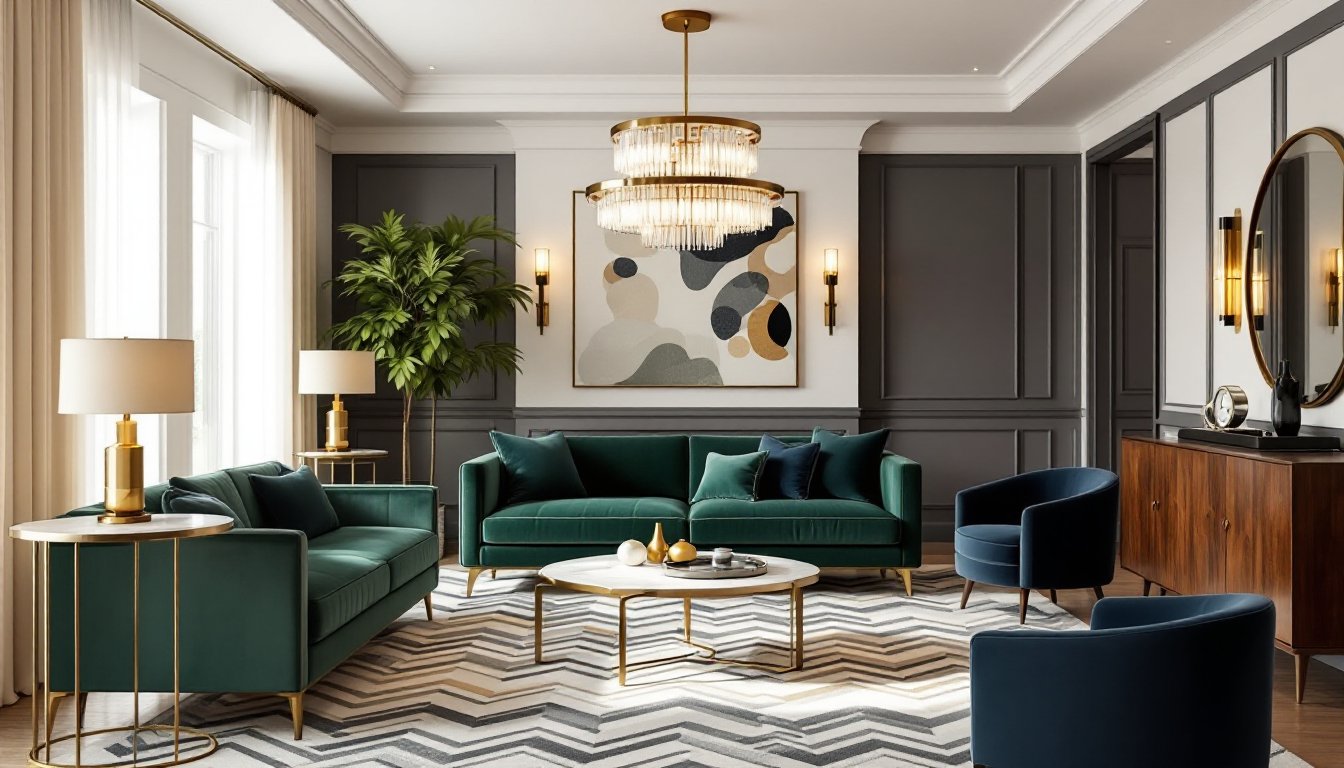
Art Deco never really left, it just evolved. The style that defined the Roaring Twenties has found new life in modern interiors, where geometric precision meets contemporary comfort. A modern Art Deco living room balances the era’s signature glamour with today’s cleaner lines and livable layouts. It’s not about recreating a 1920s speakeasy: it’s about cherry-picking the best elements, rich materials, bold shapes, metallic accents, and integrating them into a space that feels current, not costume-y. Whether starting from scratch or layering Art Deco touches into an existing room, the key is restraint paired with intentional drama.
Table of Contents
ToggleKey Takeaways
- Modern Art Deco living rooms balance 1920s glamour with contemporary restraint by cherry-picking geometric patterns, metallic accents, and rich materials without recreating a themed space.
- Incorporate Art Deco’s signature geometric patterns—chevrons, hexagons, and sunbursts—through large-scale wallpaper, bold area rugs, and architectural details to anchor the style.
- Select two to three luxurious materials like brass, velvet, marble, or mirrored glass and repeat them consistently across furniture and accents to create cohesion.
- Use high-contrast color schemes with deep jewel tones (emerald, sapphire) or neutrals paired with metallic accents, ensuring saturated hues are balanced with neutral breathing room.
- Choose furniture with low profiles, tapered legs, and clean lines—think track-arm sofas, geometric coffee tables, and sideboards—avoiding distressed finishes that contradict Art Deco’s polish.
- Statement lighting fixtures like tiered chandeliers, geometric pendants, and sculptural floor lamps are essential to modern Art Deco design and should be properly sized and safely installed.
What Defines a Modern Art Deco Living Room?
Modern Art Deco living rooms walk a tightrope between opulence and minimalism. The original Art Deco movement (roughly 1920–1940) celebrated machine-age precision, exotic materials, and unabashed luxury. Today’s interpretation keeps the geometry and glamour but dials back the excess.
Expect symmetry in furniture arrangement, high-contrast color schemes, and materials that catch light, lacquered wood, polished brass, mirrored surfaces. Unlike pure mid-century modern or Scandinavian styles, modern Art Deco leans into decoration. Crown molding, statement lighting, and patterned textiles aren’t just allowed, they’re essential.
The “modern” part means avoiding overly ornate reproductions. A stepped mirror frame works: a full-on sunburst clock collection tips into theme-park territory. The goal is a curated look that nods to the past without living in it. Many contemporary furniture pieces naturally incorporate Art Deco’s clean, angular silhouettes, making the blend easier than it appears.
Essential Design Elements for Modern Art Deco Style
Geometric Patterns and Bold Shapes
Art Deco worships the straight line, the chevron, the stepped form, and the sunburst. Incorporate these through:
- Wallpaper or wall treatments: Chevron, hexagonal tile, or stylized fan motifs on a feature wall
- Area rugs: Look for bold geometric patterns in wool or low-pile synthetic blends (easier to clean)
- Architectural details: Consider picture-frame molding, wainscoting with stepped profiles, or coffered ceilings if budget and skill allow
Keep patterns large-scale and high-contrast. Small, busy prints dilute the effect. If adding wallpaper, prep walls carefully, smooth any imperfections with joint compound and sand to 150-grit before hanging. Peel-and-stick options work for renters but may telegraph wall flaws more than traditional paste-applied paper.
Luxurious Materials and Metallic Accents
Art Deco’s material palette skews rich: marble, velvet, lacquered wood, brass, chrome, and glass. Modern budgets and practicality mean substitutions are fair game.
- Brass and gold finishes: Use on light fixtures, cabinet hardware, picture frames, and furniture legs. Unlacquered brass develops a patina: lacquered brass stays shiny. Choose based on maintenance preference.
- Velvet upholstery: Durable and luxe. Modern performance velvets resist staining better than vintage cotton velvet.
- Mirrored and glass surfaces: Coffee tables, console tables, or decorative trays. Tempered glass is safer for high-traffic homes.
- Exotic wood veneers: Walnut, ebony, and zebrawood were Art Deco staples. Today’s engineered veneers offer the look with better dimensional stability than solid exotic hardwoods.
Don’t overload a single room with every material. Pick two or three and repeat them across furnishings and accents. A brass floor lamp, brass drawer pulls, and a brass-framed mirror create cohesion without clutter.
Choosing the Perfect Color Palette
Classic Art Deco color schemes lean into high contrast: black and white, navy and gold, emerald and cream. Modern versions can soften this slightly without losing impact.
Base colors (walls, large furniture):
- Deep jewel tones: emerald green, sapphire blue, rich burgundy
- Neutrals: charcoal, greige, warm white, or soft blush
- Black as an accent wall or in furniture frames
Accent colors (pillows, throws, artwork):
- Metallics: brass, gold, chrome, copper
- Bold secondaries: mustard yellow, burnt orange, teal
Paint sheen matters. Satin or semi-gloss finishes on trim and molding reflect light and emphasize architectural lines. Flat or matte finishes on walls provide contrast. When painting trim, use a high-quality enamel (oil-based or waterborne alkyd) for durability and a smooth, hard finish. Two coats minimum: light sanding with 220-grit between coats prevents brush marks.
For a modern take on historic aesthetics, balance saturated hues with plenty of neutral breathing room. An emerald velvet sofa pops against warm white walls: the same sofa in an all-dark room can feel oppressive.
Furniture Selection for Modern Art Deco Living Rooms
Art Deco furniture emphasizes low, horizontal profiles, curved or faceted edges, and luxe materials. Modern pieces that fit the aesthetic:
- Sofas and chairs: Look for track arms, tufted backs, and brass or tapered wood legs. Channel tufting (linear stitching) reads more Art Deco than random button tufting. Velvet, leather, or textured linen work well.
- Coffee tables: Geometric bases, think hexagonal, stepped, or waterfall-edge designs. Materials: lacquered wood, marble, or glass with metal frames.
- Storage and cabinets: Sideboards or credenzas with inlaid veneers, brass hardware, and clean lines. Mid-century modern credenzas often overlap with Art Deco in form.
- Accent chairs: Barrel chairs, wingback chairs with geometric frames, or slipper chairs in bold fabrics.
Avoid overly rustic or distressed finishes, Art Deco celebrates polish and precision. If buying vintage or secondhand, inspect veneer for lifting or water damage. Minor veneer repairs are doable with wood glue and a veneer roller, but extensive delamination may require professional restoration.
Arrange furniture symmetrically when possible. Flanking a sofa with matching side tables and lamps reinforces the style’s formal balance.
Lighting Fixtures That Make a Statement
Lighting is where Art Deco flexes hardest. The era gave us the tiered chandelier, the geometric pendant, and the sculptural floor lamp, all still relevant.
Chandeliers and pendants:
- Tiered designs with glass or crystal elements
- Geometric cages in brass or black metal
- Globe or sputnik-style fixtures (mid-century, but compatible)
Size matters. For a chandelier over a coffee table or dining area within the living room, measure the room’s length and width in feet, add them together, and convert to inches for an approximate fixture diameter. Example: a 12′ × 15′ room suggests a chandelier around 27″ wide. Hang it so the bottom clears furniture by at least 30″.
Floor and table lamps:
- Tripod or tapered bases in brass, wood, or marble
- Shades in fabric, frosted glass, or metal with cutouts
- Sculptural forms, torchiere lamps, arc lamps with adjustable arms
Wall sconces:
- Pairs flanking a mirror or artwork
- Backlit designs that create ambient glow
Always use LED bulbs rated for the fixture’s maximum wattage. Dimmable LEDs (look for “dimmable” on the package and compatible dimmer switches) let you adjust ambiance. Warm white (2700K–3000K) suits most living rooms: cooler temps feel sterile.
If installing new fixtures, follow NEC guidelines: turn off power at the breaker, use a voltage tester to confirm wires are dead, and ensure junction boxes are rated for the fixture’s weight. Chandeliers over 50 lbs typically require a ceiling fan-rated box and additional bracing. When in doubt, hire a licensed electrician, improper installation is a fire and safety hazard.
For inspiration on integrating bold lighting, browse galleries that showcase how statement fixtures anchor a room’s visual hierarchy without overwhelming other design elements.