
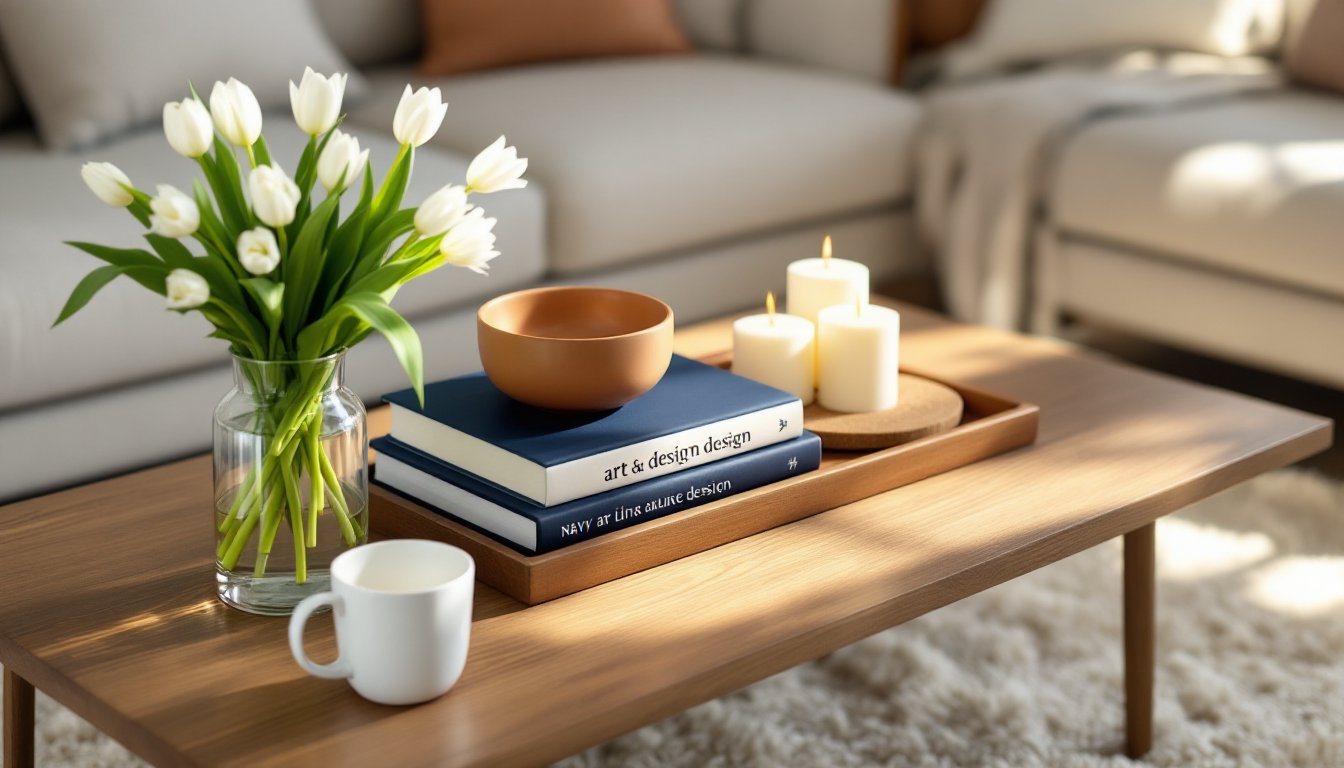
A well-styled coffee table does more heavy lifting than most homeowners realize. It anchors the living room, sets the tone for conversation areas, and offers a showcase for personal style without requiring paint or power tools. But there’s a fine line between curated and cluttered, and crossing it can make even a freshly renovated space feel chaotic. The good news? Styling a coffee table follows a few straightforward principles, just like framing a wall or laying tile. Once you understand the structure, you can adapt it to any aesthetic, season, or functional need.
Table of Contents
ToggleKey Takeaways
- Coffee table decor ideas thrive on the Rule of Three—using three anchor items of varying heights creates visual balance without overwhelming the space.
- Trays and stacked books act as layering foundations that organize small items and add depth, texture, and personality to your coffee table styling.
- Incorporating natural elements like potted plants, fresh florals, and organic materials (wood, stone, ceramic) brings warmth and breaks up manufactured surfaces.
- Functional decor means leaving 12–18 inches of clear surface space for everyday use while keeping coasters, remotes, and accessories integrated into the design.
- Seasonal swaps of accent pieces—lighter colors for spring/summer, warm tones for fall, and metallic finishes for winter—keep your coffee table feeling fresh and intentional.
- Effective coffee table styling balances aesthetics with real-world function, transforming a modest living room into a polished, gathered space without requiring major renovation.
Why Coffee Table Styling Matters More Than You Think
The coffee table sits at eye level when you’re seated, which means it gets more visual attention than most furniture in the room. It’s the first surface guests see when they sit down, and it defines the usability of your main gathering space.
A poorly styled table creates visual clutter that distracts from the rest of the room, even if your sofa, rug, and paint are on point. Conversely, a thoughtfully arranged surface can elevate budget furniture and make a modest living room feel intentional and polished.
From a practical standpoint, the coffee table handles daily traffic: remotes, coasters, snacks, books, and laptops. If the styling doesn’t account for real use, it’ll get dismantled within a day. Effective decor balances aesthetics with function, leaving room for the items you actually need while maintaining visual interest.
Think of it like trim work: when it’s done right, it frames everything else. When it’s off, the whole room feels incomplete.
The Rule of Three: Creating Balanced Coffee Table Displays
Interior designers rely on the Rule of Three because odd-numbered groupings create visual tension that feels natural rather than static. Three objects, or three clusters, give the eye a path to follow without overwhelming the space.
Start with three anchor items of varying heights: a tall vase or candle, a medium-height stack of books, and a low bowl or tray. This creates vertical interest and prevents the flat, lifeless look that happens when everything sits at the same level.
Scale matters as much as number. On a standard 48-inch rectangular coffee table, aim for items that take up roughly one-third to half the surface. Leave negative space, it’s not wasted real estate. Breathing room prevents the arrangement from feeling cramped and allows functional items like drinks or phones to coexist with decor.
For round or oval tables, use a triangular arrangement with one item at the center and two flanking pieces. For square tables, a centered tray with asymmetrical groupings works well.
Avoid perfect symmetry unless you’re going for a formal, traditional aesthetic. Offset placements feel more relaxed and current, much like how staggered deck boards look better than a grid pattern.
Layering with Trays and Books for Instant Sophistication
Trays are the equivalent of underlayment in flooring, they provide a base layer that organizes and elevates everything placed on top. A tray corrals small items (candles, coasters, a small plant) into a cohesive unit, making it easy to clear the table when needed.
Choose trays with low sides or no sides at all. Materials like wood, metal, or woven rattan add texture without competing with other decor. A 12 × 18-inch tray works for most standard coffee tables: go larger for oversized tables.
Stacked books add height and introduce color, pattern, and personality. Use two to four hardcover books per stack, with the largest on the bottom. Arrange spines outward if the covers are plain, or face-up if the covers are visually interesting. Interior design guides, photography collections, and art books work well, they double as conversation starters.
Top the book stack with a small decorative object: a sculptural piece, a candle, or a small plant. This technique, called styling in layers, creates depth similar to how baseboards, chair rails, and crown molding add dimension to a wall.
Many interior design guides highlight layering as a core principle for creating visual interest without clutter. The key is variation in texture and height, not quantity.
Natural Elements That Bring Life to Your Coffee Table
Organic materials soften hard surfaces and connect indoor spaces to the outdoors, much like how natural wood trim warms up drywall. Live plants, fresh florals, and natural textures (wood, stone, ceramic) break up the manufactured look of most living room furnishings.
For low-maintenance greenery, choose small potted succulents or a single stem in a bud vase. Avoid large, sprawling plants that obstruct sightlines or tip easily. If live plants aren’t practical, high-quality faux stems work, just skip the dusty silk versions from big-box stores.
Fresh flowers elevate any arrangement instantly, but they require weekly swaps. A single variety in a simple vase (white tulips, eucalyptus branches, or seasonal blooms) looks more sophisticated than mixed bouquets.
Incorporate natural materials through bowls, coasters, or decorative objects. A wooden dough bowl, stone catchall, or ceramic dish adds textural contrast against glass or metal table surfaces. These pieces also serve double duty as functional storage for remotes or keys.
Steer clear of artificial fruit or overly themed decor (seashells, pinecones in bowls). Natural elements should feel organic and understated, not like a craft store display.
Seasonal Decor Swaps to Keep Your Space Fresh Year-Round
Rotating coffee table decor seasonally keeps a room feeling current without major renovation. Think of it like changing air filters, small, regular updates prevent stagnation.
Spring and summer: Swap in lighter colors, fresh florals, and airy materials. White or pale-colored trays, linen coasters, and glass vessels create a bright, open feel. Add a small potted herb like basil or mint for a functional accent.
Fall: Introduce warmer tones through rust, amber, or deep green accents. Swap glass for ceramic or wood. A small brass candlestick or a bowl of dried botanicals (wheat stalks, pampas grass) works without veering into harvest cliché. Many modern decor ideas emphasize restraint in seasonal styling, one or two intentional swaps beat an explosion of pumpkins.
Winter: Layer in texture through wool, velvet, or faux fur accents (a coaster set, a small throw). Metallic finishes (brass, copper, pewter) add warmth without holiday-specific theming. Candles in amber or spiced scents work year-round but feel especially appropriate in colder months.
Keep a core set of neutral base items (trays, book stacks, a simple vase) and rotate only the accent pieces. This approach is budget-friendly and prevents storage overflow.
Functional Decor: Combining Style with Everyday Use
The best coffee table styling accounts for how the space is actually used. If remotes, coasters, and reading glasses end up scattered across the table every night, the decor plan isn’t working.
Coasters should be part of the arrangement, not hidden in a drawer. A stack of leather, cork, or stone coasters on a tray or next to a candle keeps them accessible and visually integrated.
Remote caddies or small trays prevent clutter from migrating. A shallow wooden or woven basket tucked to one side holds remotes, charging cables, and other small necessities without disrupting the overall look.
Storage ottomans or lift-top coffee tables offer hidden compartments for blankets, magazines, or toys. If you’re building or selecting a table, consider functionality from the start, similar to how you’d plan electrical outlets during a room addition.
Lighting matters, too. A small cordless lamp or a cluster of pillar candles on a tray adds ambiance and practical task light for reading or games. Battery-operated LED candles eliminate fire hazards and wax drips if young kids or pets are in the home.
When choosing the right coffee table style, prioritize surfaces that can handle daily use, sealed wood, tempered glass, or stone. Delicate finishes and unstable legs will frustrate you no matter how good they look.
Leave at least 12 to 18 inches of clear surface for setting down drinks, plates, or a laptop. If every square inch is styled, the table isn’t functional, it’s a display case.
Conclusion
Coffee table styling isn’t about perfection, it’s about creating a functional, visually balanced surface that feels intentional without becoming precious. Start with the Rule of Three, layer in trays and books for structure, and incorporate natural elements for warmth. Rotate seasonal accents to keep the space feeling fresh, and always design around real-world use. Like any good DIY project, the key is measuring twice (or in this case, editing twice) and making thoughtful choices that reflect how the space actually gets lived in.