
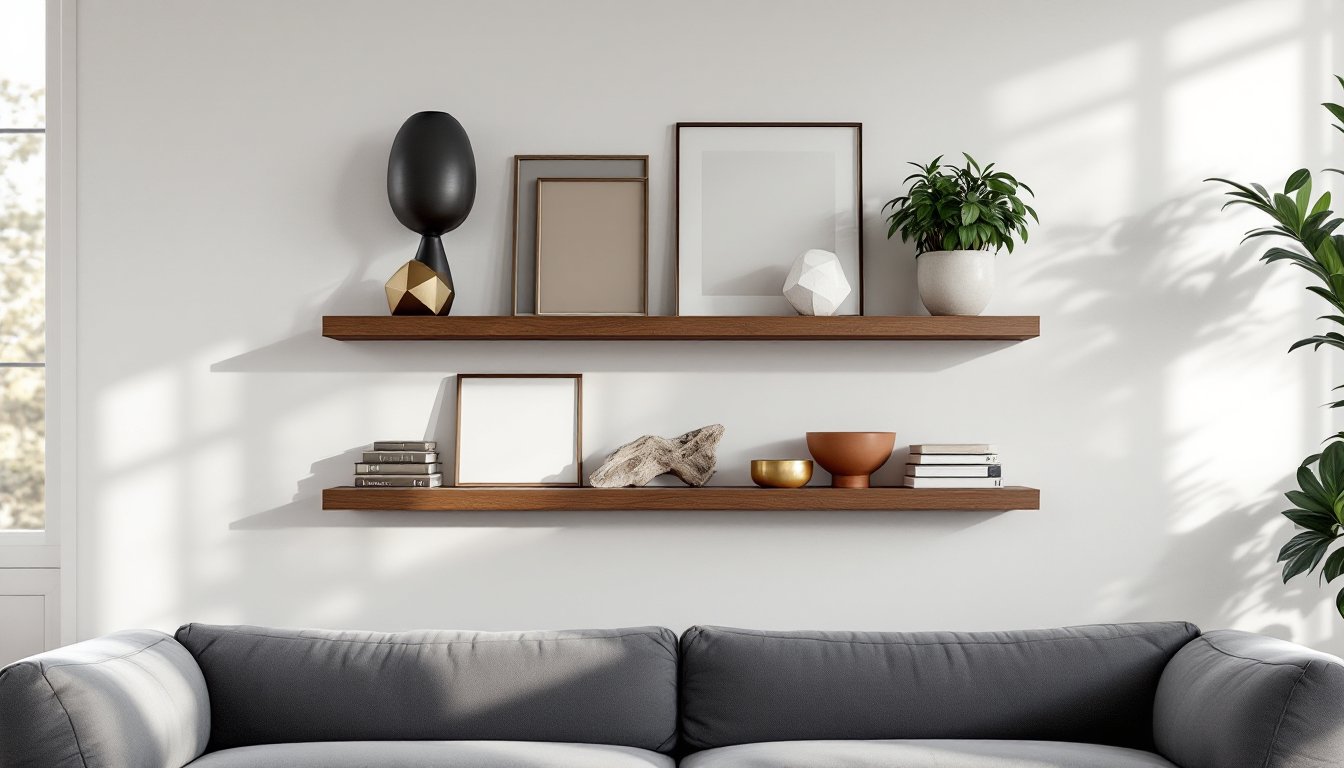
Living room shelves often sit half-empty or cluttered with random objects that accumulate over time. Yet these horizontal surfaces represent some of the most visible real estate in a home, eye-level display space that guests notice immediately and that sets the tone for the entire room. Styled thoughtfully, shelves become focal points that showcase personality while maintaining the clean lines and intentional minimalism that define modern design. This guide walks through proven styling principles, specific decor recommendations, and practical DIY projects that turn basic shelving into design-forward statements.
Table of Contents
ToggleKey Takeaways
- Modern living room shelf decor transforms visible display space into a focal point by balancing form and function while maintaining the clean lines and intentional minimalism that define contemporary design.
- Follow the rule of thirds and layering principles: divide each shelf into three sections, vary heights across shelves, and leave 30-40% empty space to prevent visual overwhelm and let objects breathe.
- Choose sculptural items like ceramic pottery, art books, natural elements, and metal accents in a limited 2-4 color palette with coordinated metallic finishes to create a cohesive, curated look.
- Avoid common mistakes like overcrowding, uniform heights, and pushing everything to the back wall—instead, mix vintage and new pieces, layer at different depths, and use the entire shelf space intentionally.
- DIY projects like concrete geometric planters, custom frame matting, and painted terra cotta pots add personalized character while keeping costs low compared to retail options.
- Update shelf arrangements seasonally and rotate collections regularly to keep living spaces feeling fresh and intentional rather than treating styling as a one-time permanent arrangement.
Why Living Room Shelves Are the Ultimate Design Opportunity
Open shelving in living spaces serves dual functions that built-in cabinetry can’t match. First, it provides accessible storage for everyday items, books, electronics, baskets, without the visual weight of closed doors. Second, it creates dedicated display zones where homeowners control exactly what visitors see.
Unlike wall art, which remains static once hung, shelf arrangements adapt as collections grow or tastes shift. Swapping out objects takes minutes, not the patching and repainting required for gallery wall changes. This flexibility makes shelves ideal for renters and indecisive decorators alike.
Modern design emphasizes negative space and intentional object placement. Shelves naturally support this aesthetic by allowing precise control over spacing, groupings, and sight lines. A well-styled shelf balances form and function, displaying meaningful objects while maintaining the uncluttered feel central to contemporary interiors.
The structural advantage matters too. Most floating shelves and wall-mounted systems can support 25-50 pounds per linear foot when properly anchored into studs with appropriate hardware. This capacity handles substantial decorative objects, art books, and even small potted plants without sagging or requiring floor space.
Essential Principles for Styling Modern Shelves
Modern shelf styling follows specific compositional rules borrowed from gallery curation. The rule of thirds applies: divide each shelf visually into three sections, placing taller items at outer edges and medium-height pieces in the center, or vice versa for asymmetrical balance.
Layering adds depth without clutter. Position flat objects like framed prints or cutting boards against the wall, mid-sized pieces like vases or sculptures in the middle zone, and smaller accents like candles or geodes at the front edge. This three-dimensional arrangement prevents the flat, lineup look of items placed in a single row.
Leave 30-40% of each shelf empty. Negative space prevents visual overwhelm and lets individual pieces breathe. In modern design, restraint signals intention, every object present earned its spot.
Vary heights across the entire shelving unit. If the top shelf holds tall candlesticks, place shorter stacks of books or low bowls on the shelf below. This creates visual rhythm that guides the eye vertically through the entire display rather than shelf by shelf.
Balance and Symmetry vs. Asymmetrical Arrangements
Symmetrical styling pairs identical or similar objects on opposite ends of a shelf, matching vases, twin plant stands, or bookends framing a central sculpture. This approach suits traditional modern spaces with clean geometry and formal furniture arrangements.
Asymmetrical styling feels more organic and contemporary. Place a tall object on one end, balance it with a grouping of smaller items on the opposite end, and leave the center relatively open. The key is visual weight, not mirror-image placement. A large pottery piece on the left might balance three small framed prints clustered on the right.
Many successful modern shelves mix both approaches, symmetry on one shelf, asymmetry on the next. This combination maintains overall cohesion while avoiding rigidity. Test arrangements by taking a photo from seating height: what looks balanced while standing often appears different from the couch.
Curated Decor Items That Define Modern Shelf Style
Certain object categories consistently appear in modern interior design because they combine sculptural form with material honesty, two cornerstones of contemporary aesthetics.
Ceramic and pottery pieces in matte finishes work across most modern palettes. Look for hand-thrown vessels with visible throwing lines, asymmetrical shapes, or reactive glazes that create color variation. Heights between 6-14 inches work best for standard 10-12 inch deep shelves.
Art books and coffee table books serve as both décor and reading material. Stack 2-4 books horizontally, then place a small object on top, a stone, a geometric candle, or a single stem in a bud vase. Choose books with spines that complement the room’s color scheme or with covers worth displaying face-out.
Natural elements connect indoor spaces to the outdoors: driftwood pieces, geodes, petrified wood, or dried botanicals under glass cloches. These organic forms contrast beautifully with the straight lines of shelving and the manufactured perfection of ceramics.
Sculptural objects in metal, wood, or stone add three-dimensional interest. Abstract shapes work better than literal representations in modern settings. Brass or blackened steel finishes bridge warm and cool tones.
Framed art or prints lean casually against the wall rather than hanging. Choose 8×10 or 11×14 frames for standard shelves. Mix frame finishes, natural wood, matte black, and brass, rather than matching everything.
Plants introduce life and improve air quality, though they require maintenance planning. Pothos, snake plants, and ZZ plants tolerate lower light common to shelving away from windows. Use simple ceramic or concrete planters that don’t compete visually with the plants themselves.
Avoid obvious mass-market filler: generic “LOVE” letter blocks, overly themed signs, or tchotchkes without sculptural merit. Each object should justify its presence through form, texture, or personal meaning.
Color Schemes and Material Choices for a Cohesive Look
Modern shelf décor typically follows a limited color palette of 2-4 main hues plus neutrals. This restraint creates cohesion across multiple shelves and prevents the chaotic look of too many competing colors.
Popular 2026 palettes include:
- Monochromatic earth tones: terracotta, rust, camel, and cream
- Cool minimalism: white, concrete gray, black, with one accent like navy or forest green
- Warm modernism: walnut browns, brass metallics, ivory, charcoal
The shelf material itself dictates some color choices. Light wood shelving (maple, birch, or light oak) pairs well with both warm and cool palettes. Dark walnut or espresso-stained shelves create drama and work best with lighter-colored objects to maintain contrast. White or black floating shelves provide neutral backgrounds that showcase colorful objects.
Material mixing adds visual interest without color complexity. Combine smooth ceramics with rough linen-bound books, glossy glass with matte concrete, or polished brass with raw wood. Textures seen in contemporary furniture translate directly to shelf styling, aim for 3-4 distinct textures per shelf.
Metallic finishes should coordinate throughout the room. If furniture hardware is brushed nickel, brass candle holders on shelves create dissonance. Stick with one dominant metallic (brass, copper, chrome, or matte black) for all accent pieces.
Test color schemes by gathering candidate objects on a table before placing them on shelves. What seems cohesive in the store may clash once grouped. Most successful modern arrangements lean slightly understated, if a shelf feels busy, remove one object.
DIY Shelf Decor Projects to Personalize Your Living Room
Custom décor pieces make shelf arrangements distinctive while keeping costs reasonable compared to high-end retail options.
Concrete geometric planters require minimal supplies: concrete mix, plastic containers as molds, cooking spray, and sandpaper. Mix concrete according to package directions (typically 4 parts dry mix to 1 part water), pour into sprayed molds with smaller containers nested inside for the planting cavity, let cure 48 hours, then demold and sand rough edges. The industrial texture suits modern aesthetics perfectly, and planters cost under $5 each versus $30+ retail.
Custom frame matting transforms standard prints into gallery-quality art. Purchase oversized frames (16×20 frames for 11×14 prints), cut mat board to fit, then center the print on the mat, leaving 3-4 inches of border on sides and bottom, slightly less on top. This proportion feels more intentional than standard pre-cut mats. Use a mat cutter ($15-30) or have mat board cut at frame shops that offer cutting services.
Wood bead garland adds texture and horizontal movement across shelves. Purchase unfinished wood beads in varying sizes (20mm to 40mm work well), string them on leather cord or heavy twine, and space them unevenly, clustering some beads, leaving gaps between others. Drape the garland in loose curves across shelf fronts or wind it between objects. Total materials cost under $15 for a 3-4 foot strand.
Painted terra cotta pots upgrade basic nursery containers. Clean pots thoroughly, apply primer designed for glossy surfaces, then use latex or chalk paint in modern neutrals. Geometric patterns made with painter’s tape, color-blocked halves, thirds, or angular sections, add visual interest without fussiness.
Safety note: When drilling into walls for shelving support, use a stud finder to locate framing and anchor heavy-duty brackets directly into studs with 3-inch wood screws. Drywall anchors alone won’t support loaded shelves safely. Always wear safety goggles when drilling overhead.
Common Shelf Styling Mistakes to Avoid
Even experienced decorators fall into predictable traps that undermine modern shelf displays.
Overcrowding kills the breathing room essential to contemporary design. If adding one more object means rearranging everything else to fit, the shelf is full. Remove something instead.
Ignoring scale relationships creates awkward compositions. Tiny objects get lost on deep shelves: oversized pieces overwhelm narrow ones. Match object size to shelf dimensions, items should occupy 40-60% of the available depth.
Uniform heights across a single shelf create a flat, boring horizon line. Introduce tall candlesticks, stack books to create elevation changes, or lean large frames for vertical variation.
Pushing everything to the back wall wastes the front half of the shelf and makes the arrangement look tentative. Pull some objects forward, layer pieces at different depths, and use the entire shelf depth.
Matching everything produces showroom stiffness rather than collected-over-time authenticity. Mix vintage and new, handmade and manufactured, rough and refined. Curated home décor ideas demonstrate how deliberate variety strengthens rather than weakens cohesion.
Neglecting negative space around individual objects makes it impossible to appreciate any single piece. Leave 2-3 inches between groupings so each element reads clearly.
Poor lighting renders even perfect styling invisible. If shelves sit in dim corners, add picture lights, LED strip lighting along shelf undersides, or adjustable track lighting aimed at displays. Modern shelf styling relies on shadow and highlight to reveal texture and form.
The ultimate mistake? Treating shelf styling as permanent. Successful arrangements evolve, swap seasonal elements, rotate collections, and refresh displays when they stop catching your eye. This ongoing curation keeps living spaces feeling current without requiring renovation.