
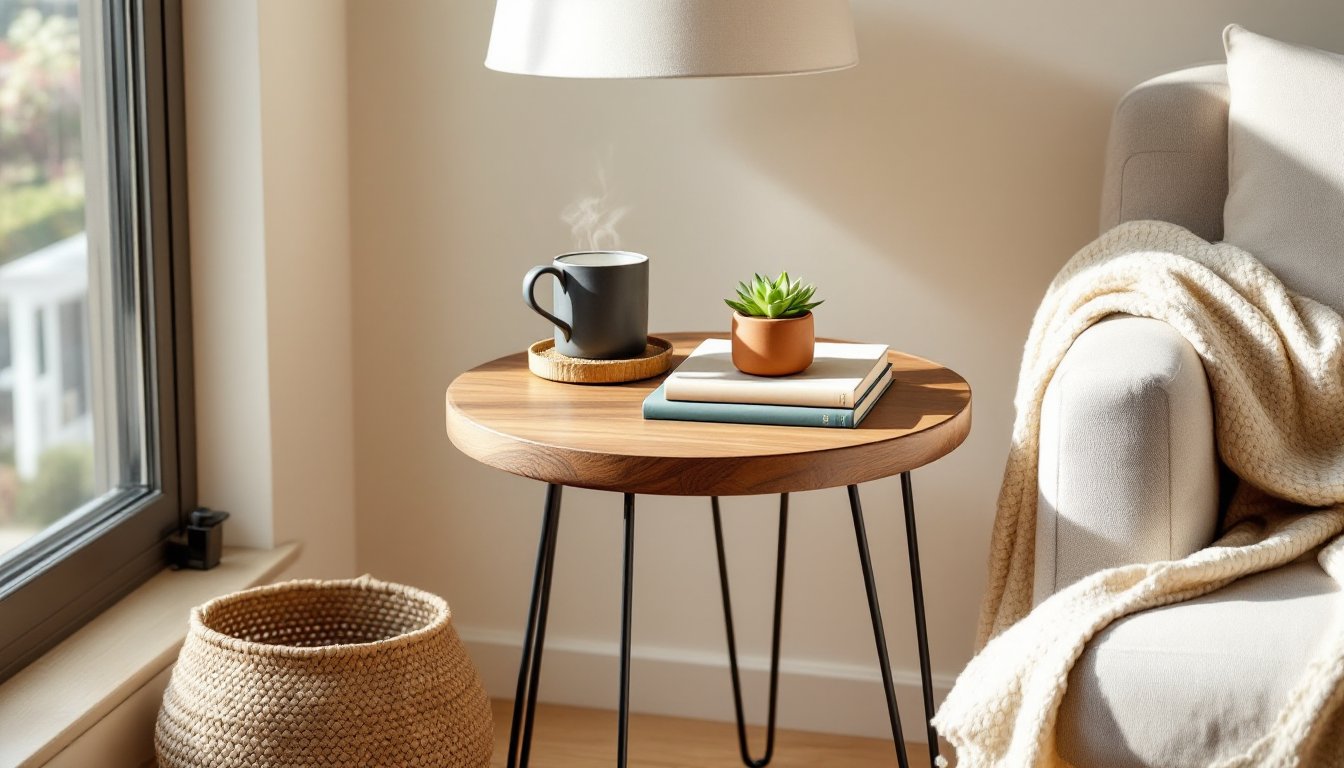
A side table might seem like a small detail, but it’s one of the hardest-working pieces in your living room. It holds your coffee, your remote, your reading lamp, and it either ties the room together or looks like an afterthought. Whether you’ve got a blank corner, a lonely sofa arm, or a tight space between two chairs, the right side table can add function, personality, and polish without a full renovation. This guide covers more than 15 ideas, from modern minimalist designs to rustic reclaimed builds you can finish in a weekend.
Table of Contents
ToggleKey Takeaways
- The ideal side table height should match your sofa’s armrest (typically 22–26 inches) to balance aesthetics and functionality while avoiding a clunky or unusable appearance.
- Living room side table ideas range from modern minimalist designs with clean lines to rustic reclaimed wood pieces, each offering versatility and personality for different design styles.
- Multi-functional side tables with storage, nesting options, or lift-top features maximize limited space while solving practical problems in small living rooms.
- DIY side table projects like the simple box table, hairpin leg design, or wooden crate table can be completed in a weekend with basic tools and materials under $50.
- Styling your side table effectively means using 3–5 items max, balancing a functional lamp or tray with one decorative element, and avoiding clutter for a polished look.
- When selecting reclaimed wood side tables, prioritize solid joinery, sealed finishes, and wide footprints to ensure durability and stability in your living room.
Why the Right Side Table Makes All the Difference
Side tables are the punctuation marks in a well-designed room. They define zones, balance visual weight, and give you a landing spot for essentials without cluttering the coffee table.
From a design standpoint, side tables anchor seating areas. A sofa without a table next to it looks unfinished. A reading chair without a place to set a book feels awkward. Height, scale, and material all matter, pair a low-slung sofa with a table that’s roughly the same height as the armrest, typically 22–26 inches. Too tall and it looks clunky: too short and it’s useless.
Functionality matters just as much as aesthetics. If you read in that spot, you need a table large enough for a lamp and a mug. If you’re working with a small space, consider models with built-in storage or nesting options. The best side tables do double duty: they look good and they solve a problem.
Modern Minimalist Side Table Designs
Minimalist side tables strip away ornament and focus on clean lines, simple geometry, and honest materials. Think metal frames, glass tops, and solid hardwood in natural finishes.
Popular minimalist styles include:
- C-shaped tables that slide under a sofa or chair, ideal for tight spaces
- Round pedestal tables in powder-coated steel or brushed brass
- Slim rectangular tables with hairpin legs or box frames in matte black
- Marble or concrete tops paired with minimal metal bases
These designs work best in rooms with neutral palettes and uncluttered surfaces. If you’re aiming for a Scandinavian or mid-century modern vibe, stick to natural oak, walnut, or ash with visible grain. For an industrial edge, go with raw steel or blackened iron.
One benefit of minimalist tables is their versatility. A simple round table in a neutral finish can move from living room to bedroom to home office without looking out of place. Many designers featured on interior design platforms favor this adaptability when working with evolving spaces.
Rustic and Reclaimed Wood Side Tables
Reclaimed wood tables bring warmth, texture, and a bit of history into your space. They’re also surprisingly versatile, a weathered barn wood table can work in a farmhouse living room, a modern loft, or even a coastal cottage.
Look for pieces made from salvaged lumber, barn siding, or pallet wood. The best reclaimed tables show their age: nail holes, saw marks, varying grain patterns, and natural color shifts. Some makers leave the wood raw with a clear coat: others add a light stain to even out the tone.
Key features to look for:
- Solid joinery: mortise-and-tenon or through-bolted construction, not just glue and pocket screws
- Sealed finish: raw wood stains easily, make sure it’s protected with polyurethane, tung oil, or wax
- Stable base: heavier reclaimed wood can be top-heavy, so check for a wide footprint or steel bracing
If you’re buying reclaimed furniture, ask about the wood source. Salvaged material from demolished buildings or deconstructed barns is more sustainable than wood harvested specifically for the “rustic” look. Many rustic side table designs highlighted on home decor showcases emphasize authenticity and craftsmanship over mass production.
Multi-Functional Side Tables for Small Spaces
In small living rooms, every piece of furniture needs to earn its spot. Multi-functional side tables pack storage, flexibility, and style into a compact footprint.
Top multi-functional designs:
- Nesting tables: two or three tables that stack together and pull apart when you need extra surface area
- Side tables with drawers or shelves: great for stashing remotes, chargers, and magazines out of sight
- Lift-top tables: the top lifts and tilts forward, turning a side table into a mini desk or eating surface
- Ottomans with trays: a cushioned ottoman can double as seating or a footrest, and a removable tray turns it into a stable table
- Wheeled carts: rolling bar carts or utility carts can move from living room to kitchen as needed
When space is tight, avoid bulky aprons or lower shelves that block floor space visually. Open-frame designs or pedestal bases make a room feel larger. Measure your available space carefully, most side tables are 16–24 inches wide, but in a narrow layout, even an extra two inches can make a difference.
DIY Side Table Projects You Can Build This Weekend
Building your own side table is more approachable than it sounds. With basic tools, a little lumber, and a free afternoon, you can create a custom piece that fits your space and style.
Simple Box Table
Materials:
- Four 1×12 pine boards (actual dimensions: 3/4″ × 11-1/4″)
- Wood glue, 1-1/4″ finish nails or pocket screws
- Sandpaper (80, 120, 220 grit)
- Stain or paint, polyurethane topcoat
Tools:
- Circular saw or miter saw
- Drill/driver
- Nail gun or pocket-hole jig (optional but faster)
- Clamps
Steps:
- Cut two boards to 18 inches (top and bottom), two boards to 20 inches (sides).
- Sand all edges and faces smooth.
- Apply wood glue to edges and assemble the box, securing with nails or pocket screws. Clamp until dry.
- Sand joints flush, apply stain or paint, then seal with two coats of polyurethane.
Hairpin Leg Table
Buy a set of 16-inch or 18-inch hairpin legs online (around $20–$30 for a set of four). Cut a piece of 3/4″ plywood or solid hardwood to your desired tabletop size, 16″ × 16″ or 18″ × 24″ are common. Sand the top, finish with stain or paint, then screw the legs into the corners using the provided mounting plates. This project takes under two hours and looks like a mid-century modern piece.
Crate Side Table
Find a sturdy wooden crate (many home improvement stores sell new pine crates for $10–$15). Sand any rough edges, stain or paint it, and set it on its side. Add furniture pads or casters to the bottom. Optional: add a piece of 1/4″ plywood or tempered hardboard to the back for a finished look.
Safety note: Always wear safety glasses when cutting or nailing, and use a dust mask when sanding or applying finishes in enclosed spaces.
Styling Your Side Table: Accessories and Arrangement Tips
A side table isn’t just functional, it’s a chance to add personality and polish to your living room. But styling one well means balancing utility with aesthetics.
Start with the essentials:
- Lighting: A small table lamp or a cordless LED lamp if you don’t have an outlet nearby. Choose a lamp that’s proportional to the table, base should be no wider than half the table’s width.
- A coaster or small tray: Protects the surface and corrals small items like remotes or lip balm.
- A plant or fresh flowers: Adds life and color. Choose low-maintenance options like pothos, snake plants, or a small succulent.
Layering and height variation make a table look intentional, not cluttered. Stack two or three books (hardcovers work best), place a small object or candle on top, and add a taller element like a vase or lamp to one side. Avoid centering everything, asymmetry feels more natural.
What to skip:
- Too many small objects (three to five items max)
- Anything that tips easily or blocks the lamp
- Items that don’t serve a purpose or bring you joy
Many curated side table displays emphasize restraint: a lamp, a book, and a single decorative object often look better than a crowded surface. If you use the table daily, keep it functional first and styled second.
Conclusion
The right side table doesn’t just fill a gap, it completes a seating area, solves a storage problem, or adds a hit of style that ties the room together. Whether you’re drawn to sleek modern designs, rustic reclaimed wood, or a quick DIY build, the best choice is the one that fits your space, your needs, and your taste. Measure carefully, think about function first, and don’t be afraid to build or customize if you can’t find exactly what you want.