Home elevators aren’t just a luxury, they’re a long-term investment in accessibility and convenience. But like any mechanical system with moving parts, cables, and electronics, they demand regular attention. Skip the maintenance schedule, and a homeowner’s dealing with stuck cabs, safety failures, or a five-figure repair bill. The good news? Most elevator breakdowns are preventable. With a mix of monthly DIY checks and annual professional service, a home elevator can run smoothly for decades. This guide walks through what every homeowner needs to know about keeping their lift safe, compliant, and reliable.
Table of Contents
ToggleKey Takeaways
- Home elevator maintenance prevents costly breakdowns and safety hazards by combining monthly DIY checks with annual professional inspections required by ASME A17.1 safety codes.
- Well-maintained hydraulic elevators can last 20-30 years, while neglected systems may require major overhauls in half that time, making routine care essential for extending lifespan.
- Monthly DIY inspections—including door operation checks, track cleaning, sensor testing, and listening for unusual sounds—take 15-20 minutes and catch problems before they escalate.
- Annual professional service costs $500-$1,200 per year and covers cable inspection, hydraulic fluid service, brake testing, electrical diagnostics, and load testing to ensure code compliance.
- Major repairs like cable replacement ($1,500-$3,000) and control board replacement ($3,000-$7,000) underscore why preventive maintenance and emergency service contracts are crucial budget considerations.
- Documented maintenance records signal responsible ownership, reduce friction during home inspections, and may be required by insurance policies and municipal permits.
Why Regular Home Elevator Maintenance Matters
Home elevators operate under constant mechanical stress. Cables stretch, hydraulic fluid degrades, and electronic sensors drift out of calibration. Unlike a staircase, an elevator’s failure isn’t just inconvenient, it’s a safety hazard.
Most residential elevators fall under ASME A17.1 safety codes, which recommend routine inspections and maintenance intervals. Some jurisdictions require annual inspections by licensed technicians, and insurance policies may mandate proof of upkeep. Neglecting maintenance can void warranties, trigger liability issues if someone’s injured, and lead to expensive emergency repairs.
Beyond compliance, regular service extends equipment lifespan. A well-maintained hydraulic elevator can last 20-30 years, while a neglected one might need major overhauls in half that time. Bearings, door operators, and control boards all degrade faster without attention. Catching wear early, say, a frayed cable or a leaking hydraulic line, prevents catastrophic failures that can cost $10,000 or more to fix.
Finally, there’s resale value. Home buyers expect working systems. An elevator with documented maintenance records signals responsible ownership and reduces negotiation friction during inspections.
Essential Monthly Maintenance Tasks You Can Do Yourself
Homeowners can’t service the drive system or adjust brake tension, but they can catch problems early with simple monthly checks. These tasks take 15-20 minutes and don’t require special tools.
Visual Inspection Checklist:
- Door operation: Open and close doors manually (if possible) and via the call button. Listen for grinding, squeaking, or hesitation. Doors should move smoothly without binding.
- Cabin cleanliness: Wipe down interior panels, handrails, and the control panel. Dust and debris can interfere with sensors and door tracks.
- Track and guide rails: Check the visible portions of guide rails for debris, corrosion, or visible damage. Vacuum out any dust or dirt in the door tracks.
- Emergency lighting and alarm: Test the cabin’s emergency light and alarm button. If battery-powered, ensure the light stays on for at least 30 minutes.
- Door sensors: Wave a hand through the door opening while it’s closing. The door should reverse immediately. If it doesn’t, don’t use the elevator, call a tech.
- Unusual sounds or vibrations: Ride the elevator and note any new noises, humming, clicking, or grinding can signal motor, cable, or pulley issues.
Safety note: Never attempt to open the elevator shaft door or access the machinery without professional training. Modern elevators have interlocks that prevent movement when doors are open, but bypassing these is dangerous and illegal in most areas.
If anything seems off, jerky movement, strange smells (burning or hydraulic fluid), or error codes on the control panel, stop using the elevator and contact a licensed technician. Monthly checks aren’t about fixing problems: they’re about spotting them before they escalate.
Annual Professional Inspections and Service Requirements
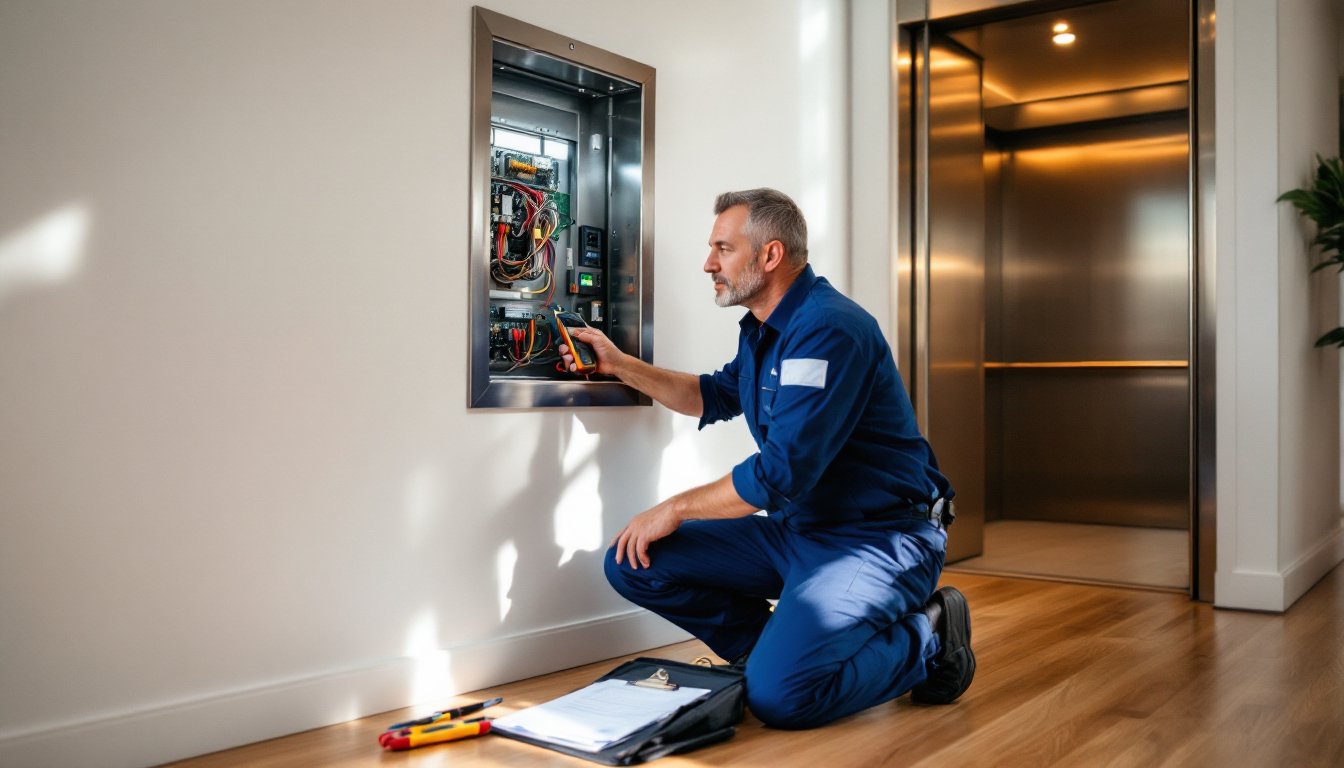
While monthly DIY checks handle surface-level issues, annual professional service digs into the mechanical and electrical guts of the system. Most manufacturers and jurisdictions require at least one full inspection per year by a certified elevator technician.
What a professional inspection covers:
- Cable and pulley inspection: Technicians measure cable wear, check for broken strands, and inspect sheaves (pulleys) for groove wear. Cables are load-bearing components and must meet strict safety margins.
- Hydraulic system service (if applicable): For hydraulic elevators, techs check fluid levels, inspect hoses and seals for leaks, and test the pressure relief valve. Hydraulic fluid should be changed every 3-5 years depending on use.
- Brake and safety mechanism testing: Emergency brakes, overspeed governors, and safety clamps are tested under load to ensure they’ll stop the cab in a failure scenario.
- Electrical system diagnostics: Control boards, limit switches, door interlocks, and wiring are inspected for wear, corrosion, or code violations. Software updates may be applied if the system uses programmable controllers.
- Door operator adjustment: Professionals calibrate door opening/closing speed, force limits, and sensor alignment to meet current ASME A17.1 or local code requirements.
- Load testing: Some inspections include running the elevator with test weights to verify it operates safely at rated capacity.
Many elevator manufacturers offer annual service contracts bundled with emergency call-out coverage. These typically cost $500-$1,200 per year depending on elevator type and regional labor rates. Homeowners can often find these plans through home improvement platforms that connect them with certified technicians.
Permit and code compliance: Some states and municipalities require an annual operating permit, which hinges on passing an inspection. Check with local building authorities, residential elevators often fall under the same oversight as commercial ones, especially in multi-family or rental properties.
Common Home Elevator Problems and How to Spot Them Early
Most elevator failures don’t happen overnight. Recognizing early warning signs can save thousands in emergency repairs and keep passengers safe.
1. Door malfunctions: Doors that won’t close fully, reopen repeatedly, or make grinding sounds often have misaligned sensors, worn rollers, or debris in the track. Clean tracks first: if the problem persists, the door operator may need adjustment or replacement.
2. Jerky or uneven movement: If the cab lurches, bounces, or doesn’t level properly with the floor, the issue could be worn cables, a failing hydraulic valve, or a control board glitch. Leveling problems are a fall hazard, get them checked immediately.
3. Unusual noises: Grinding or screeching suggests bearing wear or cable friction. A high-pitched whine in hydraulic elevators can mean air in the system or a failing pump. Clicking from the control panel might indicate relay or contactor issues.
4. Slow response or intermittent operation: If the elevator takes longer to start, stops mid-travel, or only works sporadically, suspect electrical issues, corroded contacts, failing relays, or voltage irregularities. This can also be a sign of motor wear.
5. Odors: A burning smell points to electrical shorts or overheating motors. A hydraulic oil smell means a leak, which can damage flooring and create slip hazards. Both require immediate professional attention.
6. Cabin lighting or alarm failures: These are safety-critical. If the emergency light doesn’t work or the alarm isn’t audible outside the cab, passengers could be stuck without a way to signal for help.
Many of these issues are covered in preventive service plans offered by local contractors or national companies. Platforms like ImproveNet can help homeowners compare service providers and get upfront quotes before committing to repairs.
Maintenance Costs: What to Budget for Your Home Elevator
Elevator maintenance isn’t cheap, but it’s predictable. Budgeting for routine care prevents sticker shock when a repair inevitably comes up.
Annual service contract: Expect to pay $500-$1,200 per year for a comprehensive service plan that includes one or two inspections, emergency call-outs, and minor adjustments. Hydraulic elevators tend to cost more due to fluid service and seal replacements.
Routine parts replacement: Some components wear out on a schedule. Door rollers, sensors, and light bulbs are minor expenses, $50-$200. Cabin finishes (panels, flooring) are cosmetic but can run $300-$1,000 if they need refinishing or replacement.
Major repairs: Cable replacement costs $1,500-$3,000 depending on elevator type and travel distance. Hydraulic pump or valve rebuilds run $2,000-$5,000. Control board replacements can hit $3,000-$7,000, especially for older systems with discontinued parts. According to data on average elevator service costs, homeowners should budget an additional $200-$400 annually beyond the service contract for unexpected repairs.
Emergency service: After-hours or emergency call-outs can cost $300-$600 just for the visit, plus parts and labor. A service contract often waives or reduces this fee.
Regional variation: Labor rates vary widely. Urban markets and areas with few certified techs (elevator mechanics are a specialized trade) command higher prices. Always get written quotes and confirm the technician is licensed and insured.
Insurance and permits: Some homeowners insurance policies require proof of annual inspections to maintain coverage. Municipal permits, where required, typically cost $50-$150 annually.
Extending Your Home Elevator’s Lifespan Through Proper Care
With proper maintenance, a home elevator can outlast the average HVAC system. Most residential elevators are rated for 20-30 years of service, but some well-maintained units run for 40 or more.
Keep it clean: Dust, pet hair, and debris can clog sensors, jam door tracks, and accelerate wear on mechanical parts. Vacuum tracks monthly and wipe down surfaces. If the elevator serves a garage or basement workshop, clean more frequently.
Avoid overloading: Every elevator has a rated capacity, typically 500-1,000 pounds for residential units. Exceeding this stresses cables, motors, and brakes. If moving heavy furniture or materials, check the capacity plate and make multiple trips if needed.
Address problems immediately: Small issues, a sticky button, a door that hesitates, can cascade into bigger failures. Don’t ignore warning signs or assume they’ll resolve on their own.
Update when necessary: Older elevators may lack modern safety features like battery backup, overload sensors, or phone connectivity for emergency calls. Retrofitting these can improve safety and extend the system’s useful life. Control board upgrades can also improve reliability if the original system uses obsolete components.
Follow manufacturer guidelines: Every elevator comes with a service manual specifying lubrication points, inspection intervals, and parts replacement schedules. Keep this manual accessible and share it with your technician.
Document everything: Maintain a logbook of all service visits, repairs, and part replacements. This helps technicians diagnose recurring issues and adds value if the home is sold. Many jurisdictions require service logs as part of permit renewals.
Conclusion
Home elevator maintenance isn’t optional, it’s the difference between decades of reliable service and a string of expensive breakdowns. Monthly DIY checks catch early problems, annual professional service keeps the system code-compliant and safe, and a realistic maintenance budget prevents surprises. Treat the elevator like any other major home system, with respect, routine care, and a good technician on speed dial, and it’ll pay back the investment many times over.